Ford Says Fathom EV Pickup Owners Can Plug In Every Time They Get Home

Ford’s upcoming Fathom electric pickup is being designed around lithium iron phosphate batteries that owners can charge to 100% regularly without the same degradation concerns associated with some other battery chemistries, according to a Ford executive.
Alan Clarke, Ford’s vice president of advanced development projects, said the company expects Fathom owners to plug the pickup in whenever they return home.
“You can cycle it as many times as you want,” Clarke told GreenCars in a recent interview.
Clarke contrasted the Fathom’s LFP battery strategy with the nickel-manganese-cobalt batteries used in most electric vehicles in the U.S. Owners of NCM-equipped EVs are generally encouraged to keep their vehicles below about 85% state of charge for routine use to reduce battery degradation.
Ford designed the Fathom primarily around LFP batteries, which are less energy-dense than some other lithium-ion chemistries but can offer cost and durability advantages.
Ford wants drivers to use the full battery
Clarke said Ford views the ability to regularly charge an LFP-equipped Fathom to 100% as a benefit that can make EV ownership more straightforward.
“Every time you go home, we’re going to encourage you to plug in.”
Rather than asking owners to limit their normal charging level, Ford wants Fathom drivers to make use of the battery’s full available capacity, according to Ford Authority.
Clarke said that approach could also improve the vehicle’s range estimation over time because the system can use repeated full charges to refine its calculations.
Ford’s goal is for drivers to see the full available range they paid for whenever they get into the truck.
“Every time you get in, we want you to see all of the range that you paid for showing on the UI.”
That could remove one of the compromises that some EV owners encounter with batteries that are generally kept below 100% during everyday use.
The Fathom is designed around LFP
The Fathom is the first production vehicle planned for Ford’s Universal Electric Vehicle, or UEV, platform. The company is also developing its own LFP battery production capabilities.
LFP batteries generally have lower energy density than nickel-based chemistries, meaning more battery material can be required to achieve the same amount of energy storage. However, Ford has identified the chemistry as a way to reduce costs while allowing the company to build an EV designed around frequent full charging.
The Fathom is expected to offer both standard- and extended-range battery configurations. Ford has previously targeted about 300 miles of range for the extended-range version, while the lower-priced standard-range model will not use the larger battery required to reach that figure.
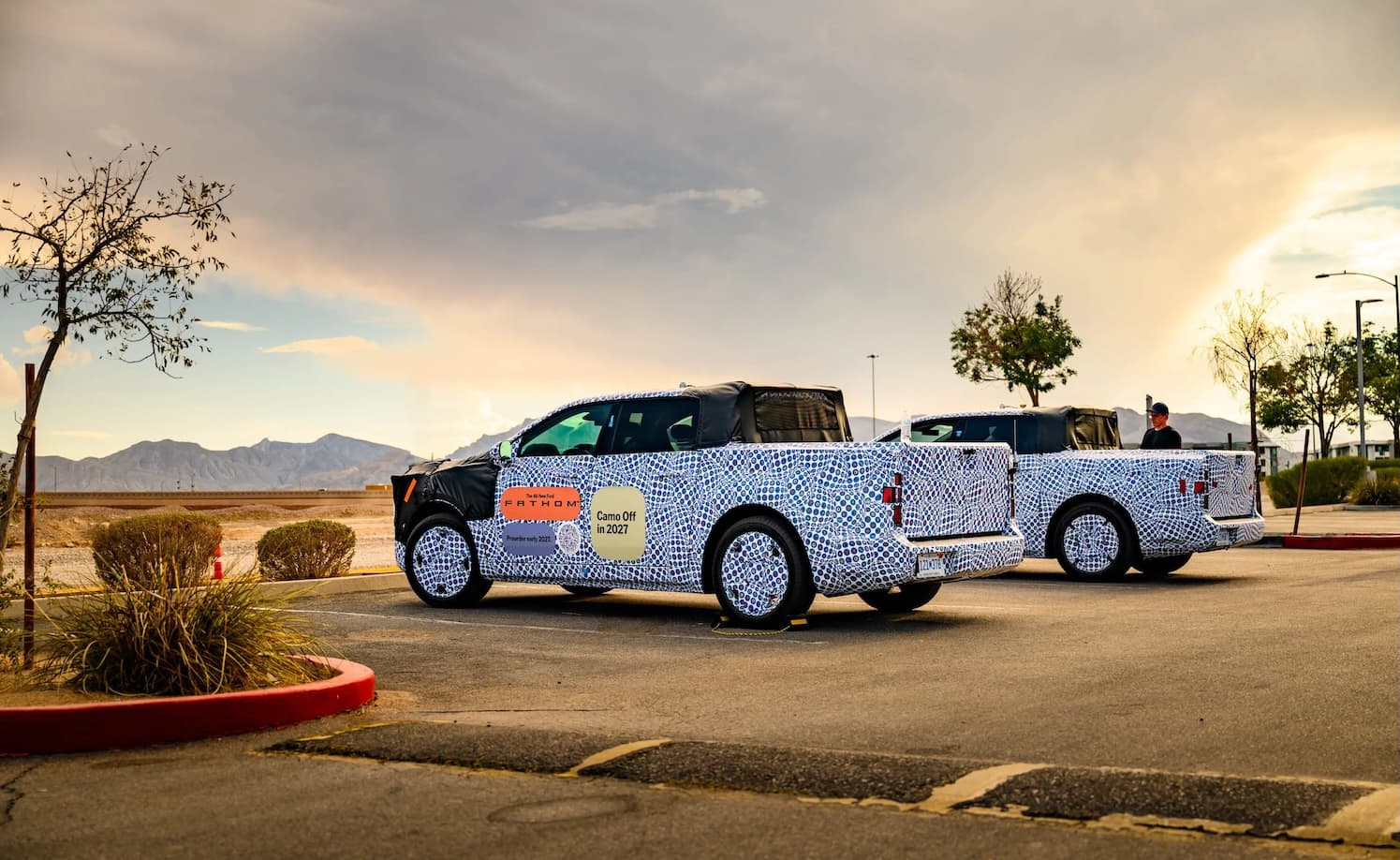
The pickup is scheduled to enter production in 2027 at Ford’s Louisville Assembly Plant in Kentucky. Preorders are expected to open in early January.
Ford has announced a starting price of $29,945, including destination charges.
A different charging routine
The Fathom’s LFP battery strategy could give owners a different daily charging routine from drivers of many other EVs.
Instead of treating 100% state of charge as something best reserved for occasional long trips, Ford is encouraging Fathom owners to charge fully whenever the truck is parked at home.
That does not mean every EV should be charged to 100% every day. Battery chemistry and the manufacturer’s charging recommendations remain important factors in determining the best charging routine for a particular vehicle.
For the Fathom, however, Ford is specifically designing the vehicle around an LFP battery that it says can tolerate frequent full charging. That strategy could make the relatively affordable electric pickup easier for owners to use without having to think as much about maintaining a particular state of charge.
EV.com tracks the evolving EV collector space and performance electric vehicles hitting the market. Explore our listings to find the best EVs in your area available today.
Comments
Categories
Related news


Subscribe for EV News and Reviews

AI Employee for Car Dealerships
Results in 30 days - Or We'll Give You Your Money Back