Used EVs from China: What Overseas Buyers Should Compare Before Choosing One
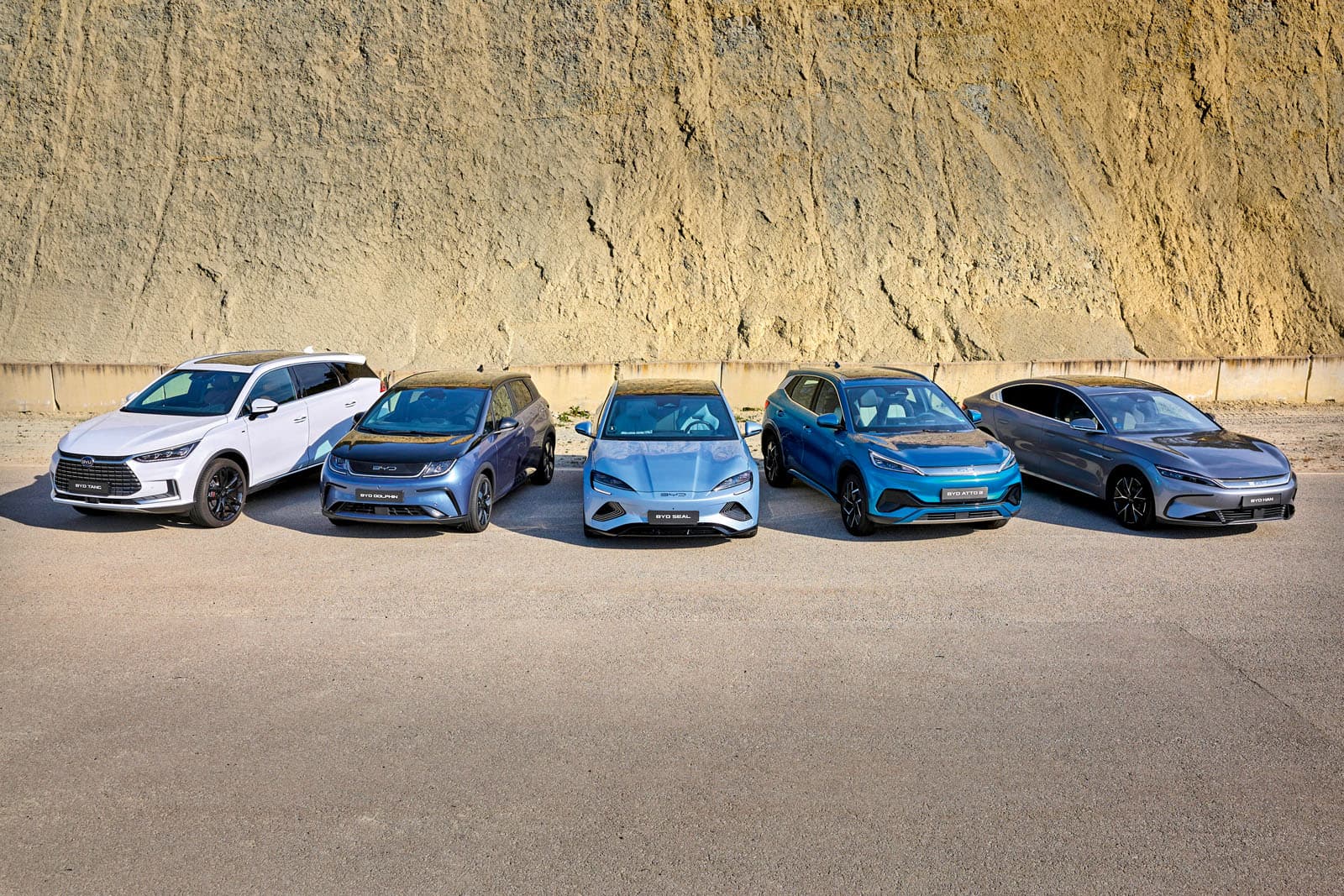
China has become one of the most important EV markets in the world. For overseas buyers, that creates a bigger pool of electric vehicles to compare, including used Tesla, used BYD and other electric cars from China. More choice is useful, but it also raises the risk of choosing a car that looks attractive online and becomes difficult to charge, register, repair or resell later.
A used EV should not be judged like a used petrol car. Mileage still matters, but it is only one part of the decision. Battery condition, real-world range, charging compatibility, software status, accident history, climate exposure, tyre wear, service access and export documents can all change the real value of the car. A low purchase price is not enough if the battery is weak, the charging port does not fit your market, or the inspection report is too vague.
Guazi is a China-based used-car platform that gives overseas shoppers a way to browse vehicle listings, compare models and review available vehicle information before making an enquiry. For EV buyers, that kind of comparison matters because the decision is rarely about one number. A buyer may need to compare Tesla and BYD options, battery range, mileage, photos, model years and price levels before deciding which vehicle is worth deeper checking.
If you are comparing used electric cars from China, the safest approach is to start with evidence, not excitement. Ask what the battery can still deliver, whether the charging standard works in your country, what the inspection report actually says and how easy the car will be to maintain after arrival. The right used EV is not simply the cheapest listing. It is the one that still fits your daily driving, charging access, import rules and long-term ownership budget.
Quick Answer: What Should Overseas Buyers Check First?
The first checks should answer one practical question: can this specific used EV work reliably in my country after I import it? A car can be a strong model in China and still be a poor fit overseas if charging, documents, service support or battery data are unclear.
| Buyer Question | Why It Matters | What to Ask For Before Payment |
| Is the battery still healthy? | Battery condition affects range, resale value and long-term cost. | Battery health report, diagnostic screenshots, dashboard range at full charge. |
| Will it charge in my country? | Charging standards and adapters vary by market. | AC/DC charging port photos, cable details, adapter advice and onboard charger specs. |
| Is the displayed range realistic? | Official range can differ from daily use. | Current full-charge range, energy consumption data and battery size. |
| Has the car been damaged? | EV battery packs and underbody components are sensitive to collision and flood damage. | Inspection report, chassis photos, accident notes and repair records. |
| Can I service it locally? | A good price means less if parts or diagnostics are difficult to access. | Local service options, spare parts availability and brand support in your destination market. |
| Are documents ready for export? | Missing documents can delay shipping, customs and registration. | Export documents, invoice, ownership records and destination-country requirements. |
Buyer note: If a seller answers only with “car is good condition” and cannot provide battery, charging, document or inspection details, slow down. A serious EV purchase needs more than clean photos.
Battery Health: The Biggest Difference Between Buying an EV and a Petrol Car
For many used EV buyers, the battery is the most important part of the purchase. It affects how far the car can travel, how quickly it charges, how much value it keeps and how expensive future problems may become. A petrol car buyer may listen for engine noise or check gearbox smoothness. A used EV buyer needs to understand battery capacity, charging behaviour and warning history.
Battery degradation is normal. The useful question is not whether the battery has aged at all. It is whether the current condition is reasonable for the car’s age, mileage, climate use and price. A higher-mileage EV with clear battery data can be safer than a lower-mileage EV with no diagnostic information. The risk is not high mileage by itself; the risk is not knowing what the battery can still deliver.
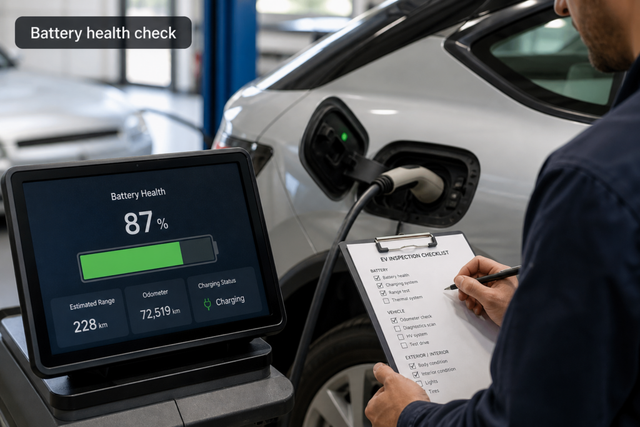
Ask for a battery health report if available. If a full report is not available, ask for practical evidence:
- A dashboard photo at or near 100% charge.
- The displayed range at that charge level.
- Odometer reading in the same photo set.
- Any battery or charging warning messages.
- Recent charging behaviour, especially whether fast charging works normally.
- Whether the battery pack, high-voltage system or charging unit has ever been repaired.
Fast charging is convenient, but repeated fast charging, extreme heat, deep discharge and poor storage can all affect battery life. That does not mean a car with fast-charging history should be rejected automatically. It means the buyer should compare the price against battery condition and use case.
What Battery Information Means in Real Buying Decisions
If the car will be used mainly for city commuting, a moderate range reduction may still be acceptable if the price is fair. If the car will be used for long-distance travel, commercial work or markets with limited charging infrastructure, range buffer becomes much more important. Do not buy a car that only just meets your daily distance on paper.
| Battery Situation | What It May Mean | Buyer Decision |
| Strong displayed range, clean diagnostics | Lower uncertainty | Good candidate if price and documents also make sense. |
| Acceptable range but high mileage | Not automatically bad | Compare tyre, suspension and service records carefully. |
| No battery data available | Higher risk | Ask for more evidence before paying. |
| Battery warning messages | Serious risk | Avoid unless inspected by a qualified EV technician. |
| Very low price with unclear battery status | Possible hidden cost | Treat as a red flag, not a bargain. |
Practical advice: Battery condition should guide price negotiation. A used EV with weaker range may still be usable, but it should not be priced like a clean, well-documented vehicle.
Real-World Range: Why the Advertised Number Is Not Enough
Range is one of the easiest numbers to misunderstand. A listing may show the model’s original range, a best-case range or a dashboard estimate. None of those numbers alone tells you exactly how the car will perform in your country.
Real-world range depends on:
- Battery age and usable capacity.
- Driving speed.
- City vs highway use.
- Temperature and air-conditioning use.
- Tyre size, tyre pressure and tyre wear.
- Vehicle load.
- Driving style.
- Software settings and regenerative braking.
For overseas buyers, the most useful range question is: what will this car realistically deliver in my normal driving conditions? A buyer in a hot climate with heavy air-conditioning use may see different results from a buyer in a mild climate using mostly city roads. A buyer relying on highway driving should keep more buffer than someone using the car for short urban trips.
How to Estimate Whether the Range Is Enough
Start with your real daily use, not the car’s advertised range. If your daily round trip is 60 km, a used EV showing 250 km of realistic range may be comfortable. If your daily use is 150 km and chargers are limited, a car showing 220 km may be stressful even if the listing looks attractive.
Use this simple filter:
- Write down your normal daily distance.
- Add extra range for traffic, detours and air-conditioning.
- Add a safety buffer for battery ageing.
- Check whether you can charge at home, work or nearby.
- Compare the car’s current displayed range, not only the original brochure figure.
Buyer note: A used EV should make your routine easier, not force you to plan every trip around charging anxiety.
Charging Compatibility: The Detail That Can Turn a Good Deal Into a Problem
Charging compatibility is one of the biggest risks when buying used EVs from another country. A car may be technically good, but inconvenient if the charging port, voltage, cable or fast-charging system does not match the buyer’s market.
China-market EVs may use charging standards that differ from Europe, Africa, the Middle East or other regions. Some cars can be used with adapters, but adapters should not be assumed. Fast charging, slow charging and home charging all need to be checked before purchase.
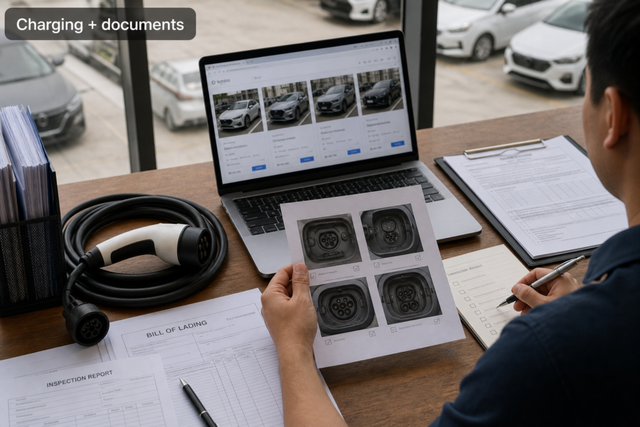
Ask the seller for clear photos of:
- The AC charging port.
- The DC fast-charging port if separate.
- Charging cables included with the car.
- Dashboard charging status during a charging session.
- Any adapters included.
Then compare those details with your local charging network. If the destination country has limited public charging, home charging becomes more important. If home charging is not available, the car should have enough real-world range and compatible public charging options.
Charging Questions Buyers Often Forget
Many first-time EV buyers ask “Does it support fast charging?” but forget to ask whether that fast-charging system is useful in their own country. They also forget to check onboard charger capacity, cable type and whether local electricians can install a suitable home charger.
Before paying, ask:
- Can this EV charge from the common home charger in my country?
- Can it use public fast chargers near me?
- Does it need an adapter?
- Is the adapter easily available and safe?
- Is the charging cable included in the price?
- Has the charging system been tested recently?
Practical advice: Charging compatibility should be checked before price negotiation is finished. It is not a small accessory issue; it affects whether the car is practical.
Used Tesla vs Used BYD: How to Compare Two Very Different EV Choices
Tesla and BYD often appear in overseas searches because they represent two strong but different EV buying paths. Tesla is widely known for software, performance, charging ecosystem, efficiency and brand recognition. BYD is known for rapid global growth, practical model choices, battery technology and value.
Neither brand is automatically the better used EV purchase. The better choice depends on the buyer’s country, budget, charging access, parts support and the condition of the specific car.
Used Tesla: Strengths and Checks
A used Tesla can be attractive for overseas buyers who want strong brand recognition, efficient drivetrains, advanced software and good resale demand in many markets. Model 3 and Model Y are especially common in global used EV discussions.
But a used Tesla still needs careful checking. Buyers should confirm:
- Battery range and diagnostic information.
- Accident history, especially structural or underbody damage.
- Screen, camera, sensor and software functions.
- Charging port compatibility.
- Number of key cards or access methods.
- Tyre condition and suspension wear.
- Local Tesla service or independent EV repair support.
A Tesla with clean history, strong battery condition and good documentation can be a strong used EV option. A Tesla with unclear repairs, missing digital access or battery-related warnings should not be chosen only because the badge is familiar.
Used BYD: Strengths and Checks
BYD is increasingly important for overseas buyers because it offers many practical EV models and has built strong recognition around battery technology. Many buyers search for used BYD because they want a China-made EV with strong value and a growing global presence.
When comparing a used BYD, confirm:
- Exact model and trim.
- Battery size and battery type.
- Displayed range at full charge.
- Charging standard and cable details.
- Local service and parts access.
- Interior electronics, infotainment and dashboard condition.
- Export documents and inspection report.
BYD may be especially attractive for buyers who want a practical daily EV rather than a performance-focused car. But local support still matters. A good BYD purchase in one country may be less convenient in another if parts and service are limited.
Tesla or BYD: Which Is Better for Your Situation?
| Buyer Situation | Tesla May Fit Better When… | BYD May Fit Better When… |
| Brand recognition matters | Resale and buyer familiarity are important in your market. | BYD awareness is growing locally and price-value matters more. |
| Daily practicality matters | You have access to Tesla service or EV specialists. | You want a practical EV with strong value and broad model options. |
| Budget is tight | A used Tesla may be too expensive once repairs are considered. | BYD may offer more vehicle for the budget. |
| Service access is limited | Tesla support may be difficult in some markets. | BYD support must also be confirmed before purchase. |
| Battery confidence matters | Clean Tesla diagnostics can support the decision. | BYD battery reputation can be attractive, but the specific car still needs checking. |
Buyer note: Do not buy “a Tesla” or “a BYD” in the abstract. Buy a specific car with a specific battery condition, charging setup, inspection report and export package.
How Guazi Can Help Overseas Buyers Compare EV Options
For overseas EV buyers, the hardest part is often not finding a vehicle name. It is comparing enough real options to understand whether the price, mileage, model year and condition make sense. This is where an online used-car platform can be useful as a research starting point.
Guazi helps buyers look across used-car listings from China and compare vehicles by brand, model and available listing information. A buyer researching EVs can use the platform to review different price levels, check how BYD and Tesla options are presented, compare photos and narrow the enquiry list before asking deeper questions about battery health, charging compatibility and export documents.
This does not remove the need for due diligence. A platform can make comparison easier, but the buyer still needs to verify the car itself. For EVs, that means asking for battery information, dashboard photos, inspection details, charging port photos and document status. Guazi’s value is strongest when buyers use it as part of a careful selection process rather than as a shortcut around inspection.
For example, a buyer who is unsure whether to choose a used BYD, used Tesla or another China EV can first compare available vehicles by price, year, mileage and photos. After that, the buyer can shortlist only the vehicles that match their budget and local charging conditions. This is more efficient than contacting random sellers one by one without a clear comparison process.
Practical advice: Use the platform to compare, then use the checklist in this article to verify. The first step is finding possible cars. The second step is proving which car is safe enough to pursue.
Vehicle Condition Reports: What Should Be Included
For overseas purchases, a condition report is not a nice extra. It is one of the main tools that helps the buyer reduce risk. Photos are helpful, but they are not enough by themselves. A proper report should help the buyer understand what is visible, what has been inspected and what still needs confirmation.
A useful used EV condition package should include:
- Exterior photos from all sides.
- Interior photos, including seats, screen and controls.
- Dashboard photos showing mileage and warning lights.
- Battery/range information.
- Charging port photos.
- Tyre photos.
- Underbody photos where possible.
- Accident or repair notes.
- Paint or panel repair information.
- Export document status.
EV underbody condition is especially important because the battery pack is usually mounted low in the vehicle. Collision damage, flood exposure or poor underbody repair can affect safety and long-term reliability.
How to Read a Condition Report Like a Buyer
Do not treat the report as a pass/fail document. Treat it as a question list. If it mentions paint repair, ask where and why. If it mentions tyre wear, ask whether alignment has been checked. If it does not mention battery health, ask whether battery diagnostics can be provided. If it does not show the charging port, ask for photos.
Practical advice: A report that clearly shows minor flaws is often better than a report that says everything is perfect but provides little evidence. Real used cars have details. Good reporting makes those details visible.
Price: Why a Cheap Used EV Is Not Always the Best Deal
Two used EVs with the same model name can have very different prices. That does not always mean one seller is expensive and the other is cheap. The difference may come from battery condition, trim level, mileage, accident history, tyres, software status, charging accessories and export readiness.
| Price Factor | Why It Changes the Real Cost |
| Battery health | Weak range can reduce usability and resale value. |
| Trim level | Long-range, performance and higher-spec versions usually cost more. |
| Accident history | Structural or battery-area damage can reduce value sharply. |
| Charging accessories | Missing cables or adapters may add cost after purchase. |
| Tyres and suspension | EVs are heavy and can wear tyres faster. |
| Software and keys | Missing access tools can create inconvenience. |
| Export documents | Missing paperwork can delay shipment or registration. |
| Local service access | Difficult repairs can make a cheap car expensive later. |
The best price is the one that matches the risk. If a used EV has clear battery data, clean inspection results and complete documents, a higher price may be justified. If key information is missing, the buyer should either ask for more evidence or negotiate with that uncertainty in mind.
Import, Registration and Local Service: Check Before You Fall in Love With the Car
Many buyers focus on the vehicle and forget the destination market. A used EV must be usable after it arrives. That means import rules, registration, charging, parts and service should be checked before payment.
Before choosing an EV from China, confirm:
- Vehicle age rules in your country.
- Steering position requirements.
- Customs and tax costs.
- Safety or inspection requirements.
- Whether the vehicle can be registered locally.
- Whether the charging standard is accepted locally.
- Whether workshops can service the brand.
- Whether replacement parts are available.
This is especially important for buyers importing into markets where EV infrastructure is still developing. A car that works well in China may still need adapters, local inspection, software checks or special documentation before it can be used smoothly overseas.
Buyer note: The purchase is not complete when the car is paid for. It is complete when the car can be registered, charged, driven and serviced in your market.
Final Thoughts
Used EVs from China can be a strong option for overseas buyers who want more choice, competitive pricing and access to brands such as Tesla and BYD. But EV buying requires a different kind of checking from traditional used-car buying.
The most important decision is not whether the car looks good in photos. It is whether the battery, range, charging system, condition report, documents and service access support the price. A smart buyer compares the full ownership picture before choosing a vehicle.
For overseas buyers, platforms such as Guazi can make the search easier by allowing users to compare models, prices, photos and vehicle information before contacting a seller. But the buyer still needs to ask the right questions. The best used EV is the one that fits your driving routine, charging access, local regulations and long-term maintenance plan.
Comments
Related news
Subscribe for EV News and Reviews

AI Employee for Car Dealerships
Results in 30 days - Or We'll Give You Your Money Back