Why a Totaled Tesla Can Make the Insurance Claims Process More Complex
Discover why minor Tesla crashes can lead to total losses and what every EV owner should know about insurance claims.
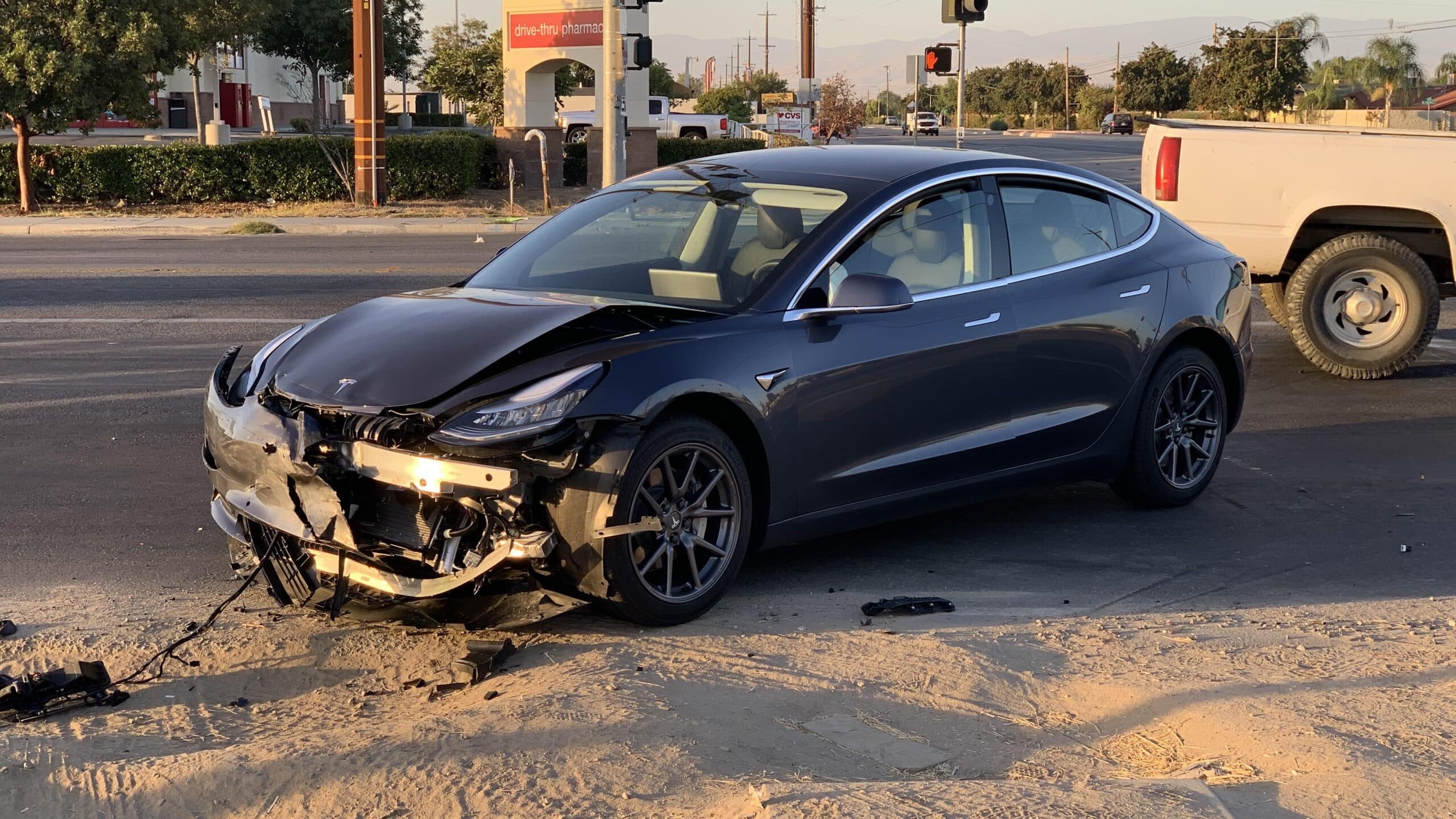
You look at photos of the damage on your phone. Nothing about it looks totaled. And yet here you are.
This is one of the most common shocks Tesla owners face after a crash and the reason it keeps happening has everything to do with how EVs are built, what they cost to fix, and what your insurance company is actually calculating when they hand you that number.
The Battery Changes Everything
Start with the physics. On a traditional gas vehicle, the engine is expensive but repairable, and a fender bender almost never touches it. On a Tesla, or really any EV with a floor-mounted battery pack, and the math is completely different. That pack sits underneath the entire vehicle. It’s structural. It’s sealed. And in many Tesla models, particularly those built with the newer 4680 cells, it’s been described by automotive engineers as having virtually zero repairability after an impact. You can’t swap out individual damaged cells. You can’t inspect what’s inside without tearing the whole thing apart. A replacement pack, depending on the model, runs anywhere from $10,000 to $18,000 just for the part before a single hour of labor.
A mainstream EV battery, such as the Tesla Model 3, Hyundai Ioniq 5, Kia EV6, costs $10,000 to $18,000 for the pack alone. Add labor and you’re looking at $12,000 to $20,000.
So when an adjuster looks at a Tesla with underbody damage near the battery area, they aren’t just seeing a dented floor pan. They’re seeing a potential $15,000 replacement plus body work, plus sensor recalibration, plus elevated labor rates at a Tesla-certified shop. Industry data through early 2025 shows EV repairs are roughly 30% more labor-intensive than similar gas vehicles, with Tesla-specific jobs frequently ranging from $1,200 to $5,000 for common hits, and far more when structural or battery areas are involved.
That’s why even minor fender benders can result in total losses. An insurance adjuster might look at the same car an owner sees as cosmetically damaged and instead see half a dozen expensive electronics that need replacement
What “Total Loss” Actually Means And It Varies by State
A total loss comes down to one comparison: repair cost versus what your car was actually worth the moment before the crash, called the Actual Cash Value, or ACV. Every state sets its own rules for when that calculation forces a total, and the differences matter.
- Arizona and California both use the Total Loss Formula: repair costs plus salvage value, and if that sum exceeds your ACV, the car is gone. With used Tesla values declining steadily through 2024 and 2025, that ACV baseline is lower than most owners expect, which means the math tips toward total loss sooner than it would have a few years ago.
- Texas gives insurers more discretion. There’s no fixed statutory threshold, so the decision is more negotiable. EV owners who show up with documented comparable sales have real room to push back.
- Georgia uses the Total Loss Formula too, but adds a wrinkle: a vehicle is also considered a total loss if it requires replacement of two or more major component parts. For Teslas, which bundle safety systems, battery management, and structure in ways legacy automakers don’t, that threshold gets crossed faster than you’d expect. World Population Review
The First Number They Give You Is Not the Final Number
When the insurance company tells you what your car is worth, that’s a starting position, not a fact. ACV calculations rely on comparable vehicles in your market, and generic valuation tools frequently miss your specific trim level, FSD package, mileage, or condition. An undervalued ACV affects everything, including whether the car gets totaled and how much you walk away with.
If you think the insurer undervalued your car, you can present evidence and negotiate. Comparable sales listings, recent auction data, and an independent appraisal all work. Most owners don’t know this is an option. They see the number, assume it’s fixed, and sign. Don’t sign before you’ve done that work.
The Diminished Value Problem Nobody Tells You About
Total loss is the clean scenario. You take the settlement check and move on. But plenty of Tesla crashes result in a car that gets repaired instead of totaled. And that creates a different, quieter problem.
Once your vehicle has been in a reportable accident, it carries that history forever. Carfax knows. Any buyer will know. Even if the car isn’t totaled and is repaired, it will often lose significant resale value. These are called diminished value claims. In California and Georgia, you generally have the right to pursue a diminished value claim against the at-fault driver’s insurance when someone else caused the crash. In Texas, that right is well established. Arizona recognizes diminished value claims too, though the process requires documentation and often pushback.
Most insurers don’t bring up diminished value voluntarily. Why would they? You have to ask for it.
The Salvage Title Is Permanent
If your Tesla is totaled and you decide to buy it back, or if you’re considering buying a used Tesla and want to make sure you’re not accidentally buying a salvage vehicle, understand this: title branding is permanent in every state in the United States. Once a vehicle receives a salvage or rebuilt title, that brand stays with it for the rest of its life and shows up on Carfax and similar reports.
Some owners buy back their totaled Teslas, get them repaired, and obtain a rebuilt title. The car can technically be driven again. But rebuilt-title vehicles are significantly harder to insure, take a heavy hit on resale value, and some insurers will limit or refuse certain types of coverage on them entirely. Know what you’re getting into before you go that route.
Gap Insurance — Get It Before You Need It
One last thing, and this is worth saying clearly. When an insurer totals your vehicle, they pay you ACV, not what you owe on your loan, and not what you paid when you drove it off the lot. If you’re financing a Tesla and the loan balance is higher than the car’s current market value, which is common with EVs that have depreciated quickly, the difference comes out of your pocket unless you have gap coverage.
Gap coverage pays the difference between your loan balance and the insurer’s settlement, and it doesn’t directly pay for a battery, but can cover the difference between your loan balance and the actual cash value paid out.
It’s a cheap add-on. Most people skip it. And then they end up paying $4,000 or $5,000 out of pocket on a car that’s sitting in a salvage yard.
You bought a Tesla because it was the smart choice for technology, efficiency, and performance. The insurance system still hasn’t fully caught up to what that vehicle actually is. Until it does, the owners who come out ahead are the ones who understand the numbers before the crash happens, and who know what to push back on when the adjuster calls.
Comments
Related news


Subscribe for EV News and Reviews

AI Employee for Car Dealerships
Results in 30 days - Or We'll Give You Your Money Back