Why Lucid Gravity Was Chosen as the Foundation for Uber’s Robotaxi

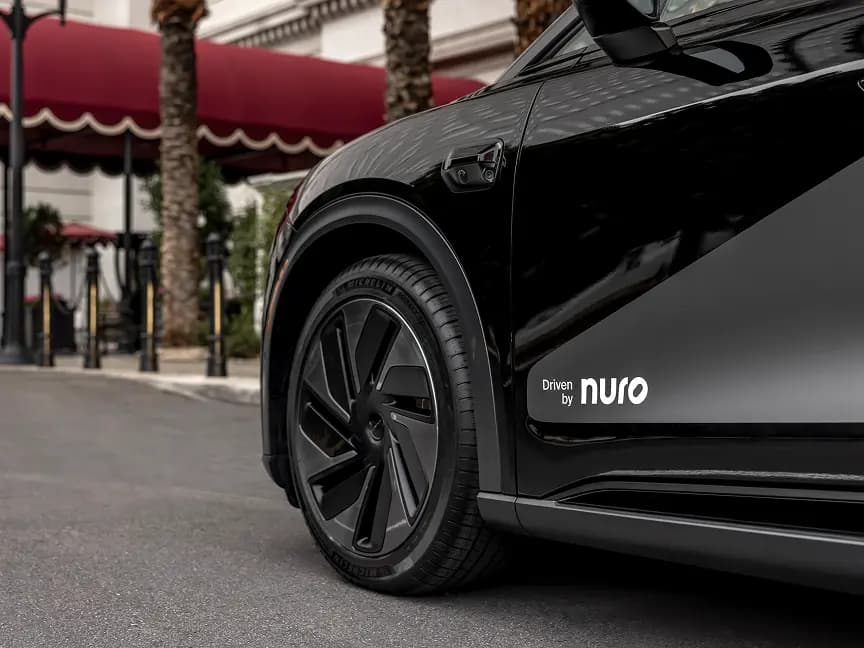
Lucid says its Gravity SUV was engineered in a way that makes it an ideal platform for autonomous ride-hailing, a case the automaker showcased at CES 2026 with a production-intent robotaxi built with Nuro and deployed exclusively on Uber.
Lucid positions Gravity as purpose-built robotaxi platform
Lucid unveiled a production-intent autonomous vehicle based on the Gravity SUV at CES 2026, developed in partnership with Nuro and slated for use exclusively on Uber’s platform.
According to Lucid, the Gravity’s long range, six-passenger seating, and large cargo capacity allow it to remain in service longer while accommodating more riders and luggage than many competing autonomous vehicles. The company said these characteristics reduce charging downtime and improve fleet efficiency, according to a press release.
“Our compromise nothing ethos really shines through in all of Lucid Gravity’s experiences,” said Zach Walker, Lucid’s senior director of product management and advanced product creation, noting the vehicle’s interior space, efficiency, and range.
Sensor integration designed into the vehicle
Lucid and Nuro said the Gravity required minimal structural changes to support autonomous hardware. Aside from a roof-mounted sensor halo, sensors are integrated into the vehicle’s existing body design, including the spoiler and fenders, and are color-matched to maintain the SUV’s exterior styling.
Hardeep Singh, Lucid’s chief engineer of rideshare products, said the goal was to avoid retrofitted designs common in other robotaxis. The sensor halo mounts using the Gravity’s existing roof rack attachment points, allowing the vehicle frame to remain unchanged.
Lucid said the autonomous hardware will be installed during assembly at its Arizona facility later this year, rather than added post-production.
Interior adapted for fleet durability, not cost cutting
Inside the cabin, Lucid made targeted modifications aimed at durability and maintenance, including fixed cup holders, secured armrests, and a simplified center console. The company said these changes were intended to withstand high ride volumes while preserving a premium experience.
The Gravity’s 34-inch 6K OLED display remains intact and will show Uber’s ride interface alongside an autonomy visualization, allowing passengers to see vehicle behavior in real time. Riders will also be able to control climate settings, seat heating, media, and request assistance or pull-over actions.
“Fleet maintenance and limiting downtime is a critical part of success,” Singh said, adding that reducing potential failure points was a priority during the redesign.
Lucid said the Gravity’s adaptability reflects its original design goals as a family vehicle, which translated effectively into an autonomous fleet platform.
EV.com tracks the evolving EV collector space and performance electric vehicles hitting the market. Explore our listings to find the best EVs in your area available today.
Comments
Categories
Related news
Subscribe for EV News and Reviews

AI Employee for Car Dealerships
Results in 30 days - Or We'll Give You Your Money Back