Tesla Cybertruck Secures Homologation In China: A Key Step Into The Chinese Market
Achieving A Key Energy Consumption Certification, Tesla’s Cybertruck Teases Potential Entry Into The Chinese Market

Tesla’s Cybertruck electric vehicle (EV) is navigating the intricate waters of international market entry, with its latest chapter unfolding in China through a series of regulatory maneuvers that blend anticipation, speculation, and strategic complexity.
The Chinese Regulatory Milestone
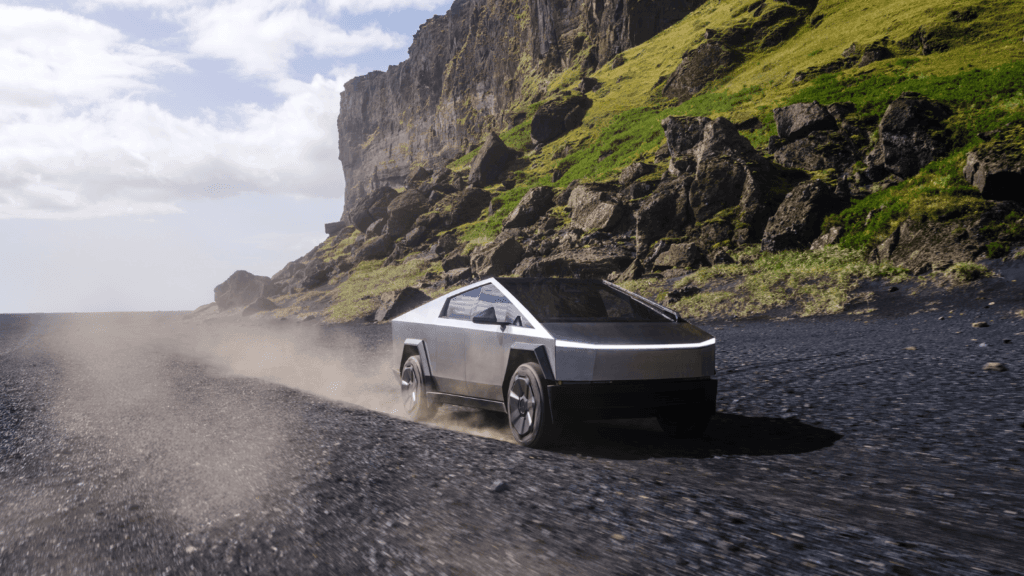
Tesla has achieved a significant regulatory step in China by obtaining an energy consumption homologation for the Cybertruck from the Ministry of Industry and Information Technology (MIIT) despite previously denying rumors of the model’s entry into the Chinese market. This filing reveals fascinating technical details that offer a glimpse into the vehicle’s potential Asian market adaptation.
The Cybertruck arrives starting with a remarkable range of 618 km. It has a curb weight of 3,104 kg and features a three-motor electric configuration with peak outputs of 206 kW, 222 kW, and 222 kW respectively. The energy consumption is calculated at 22.6 kWh per 100 km, which equates to about 2.6 liters of fuel in traditional terms. Charging costs are estimated at 14.92 yuan (around $2) per 100 km, making it an economically efficient option for EV enthusiasts.
The regulatory filing revealed critical insights into the Cybertruck’s performance under varying environmental conditions. In high temperatures, running the air conditioning can reduce the range by around 15%. In colder climates, using the heating system may result in a potential range reduction of up to 40%. These findings highlight the importance of environmental factors in influencing EV efficiency.
The Complexity of Market Entry

Despite achieving a regulatory milestone, the Cybertruck’s entry into the Chinese market faces significant obstacles. Regulatory hurdles arise from the fact that pickup trucks are not traditionally classified as passenger vehicles in China, leading to legal complexities. Additionally, Tesla may need to modify the Cybertruck’s design to meet specific market standards, particularly regarding pedestrian collision protection.
Compounding these challenges are Tesla’s own statements on the matter. CEO Elon Musk has previously acknowledged the difficulties of making the Cybertruck road-legal in international markets, and the company has remained ambivalent about its plans for the Chinese market. These barriers underscore the complexity of introducing the Cybertruck to one of the world’s largest automotive markets.
Production and Demand Dynamics
Interestingly, this regulatory filing comes amid speculation about the Cybertruck’s global market strategy. Recent reports suggest Tesla is experiencing potential demand challenges in its current markets, with the vehicle currently only sold in the United States (U.S.), Canada, and Mexico.
Moreover, the company has reportedly asked Cybertruck production line employees at Gigafactory Texas to take temporary time off, hinting at potential production adjustments.
The regulatory filing has reignited discussions about an potential international version of the Cybertruck. While Tesla has considered developing a model more suitable for markets outside the United States, no definitive confirmations have been made.
What This Means for Chinese Market

For now, Chinese consumers and global automotive enthusiasts are left in a state of cautious anticipation as the energy consumption homologation represents a procedural step, but not a guarantee of market entry.
As a result, Tesla’s approach demonstrates the complex global strategy required to introduce a revolutionary vehicle design with the Cybertruck’s journey illustrating the intricate dance between innovative design, regulatory compliance, and market adaptation.
If you are looking for Tesla models, we can help you get started. Click Here to find the best deals near you. Want to learn more about EV? Thinking of buying an EV? Head over to EV.com and discover more.
Comments
Categories
Related news
Subscribe for EV News and Reviews

AI Employee for Car Dealerships
Results in 30 days - Or We'll Give You Your Money Back