JPMorgan Backs Rivian Uber Deal But Flags Financial Risks
The deal includes a major investment and plans to deploy tens of thousands of autonomous vehicles, positioning Rivian to expand beyond traditional vehicle sales.
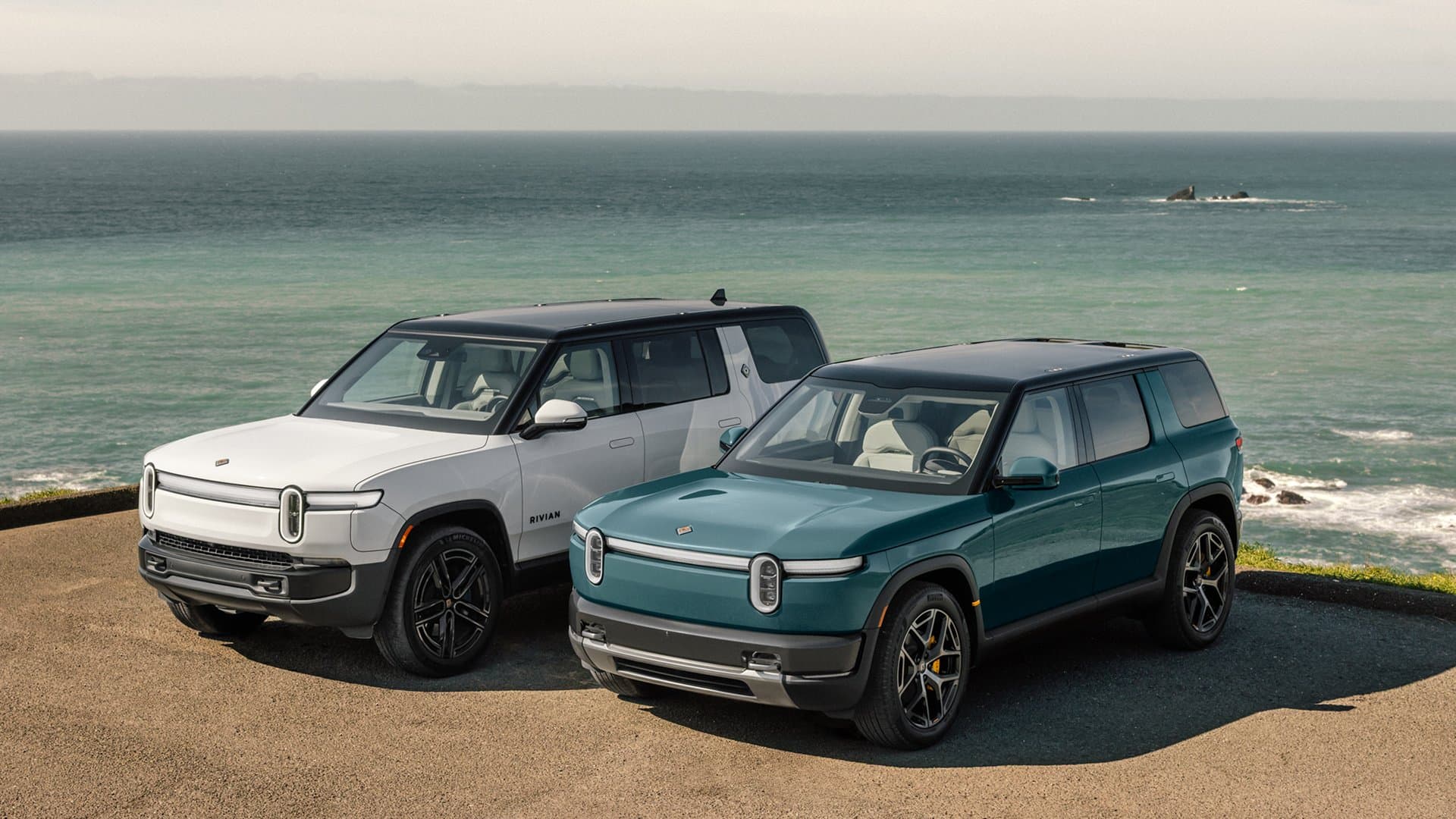
Rivian’s new partnership with Uber is being viewed as a meaningful step forward for the EV maker, even as analysts caution that financial challenges remain. The deal includes a major investment and plans to deploy tens of thousands of autonomous vehicles, positioning Rivian to expand beyond traditional vehicle sales.
The development was highlighted in a JPMorgan analyst note, which described the agreement as “mostly positive” for the company’s long-term outlook.
Rivian and Uber partnership targets large-scale autonomous deployment
Rivian and Uber announced that Uber will invest up to $1.25 billion in the EV maker and deploy as many as 50,000 autonomous R2 vehicles on its ride-hailing platform.
The companies plan to launch autonomous rides in San Francisco and Miami in 2028, with expansion to as many as 25 cities across North America and Europe by 2031, according to The Street.
The agreement also includes an option for Uber to purchase an additional 40,000 vehicles starting in 2030, further scaling the partnership if initial deployments prove successful.
Rivian CEO RJ Scaringe said the partnership will help accelerate the company’s progress toward Level 4 autonomous driving, a key pillar of its long-term strategy.

Analysts see upside but warn of ongoing financial pressure
JPMorgan analysts said the deal helps ease concerns around Rivian’s cash position, noting that the investment could help offset the company’s ongoing losses.
Despite the positive outlook, the firm maintained a cautious stance, citing Rivian’s “persistently large” operating losses and free cash outflows.
In its latest financial results, Rivian reported a $432 million loss in its automotive business, even as overall revenue grew and the company posted a $144 million annual gross profit for 2025.
The automaker has also revised expectations for profitability. According to a recent SEC filing, Rivian no longer expects to achieve positive EBITDA by 2027, largely due to increased spending on autonomous driving development tied to the Uber partnership.
Rivian is continuing to invest heavily in AI and autonomy, including integrating LiDAR systems and hands-free navigation capabilities, as it aims to compete with advanced driver-assistance systems such as Tesla’s Full Self-Driving.
EV.com tracks the evolving EV collector space and performance electric vehicles hitting the market. Explore our listings to find the best EVs in your area available today.
Comments
Categories
Related news
Lucid California Sales Fall 11.6% as Gravity SUV Declines for Second Straight Quarter

Rivian Opens Early Access to Point-to-Point Hands-Free Driving
Rivian Plans to Bring Third-Party AI Assistants Into Future Vehicles
YouTube’s Engineering Explained Host Replaces Problematic Lucid With Mustang Mach-E GT
Subscribe for EV News and Reviews

AI Employee for Car Dealerships
Results in 30 days - Or We'll Give You Your Money Back