Four Insights On Why EVs Are Cheaper Than Gas Cars In The Long Run
Let’s Breakdown Why EVs Are Cheaper Than Gas Cars In The Long Run
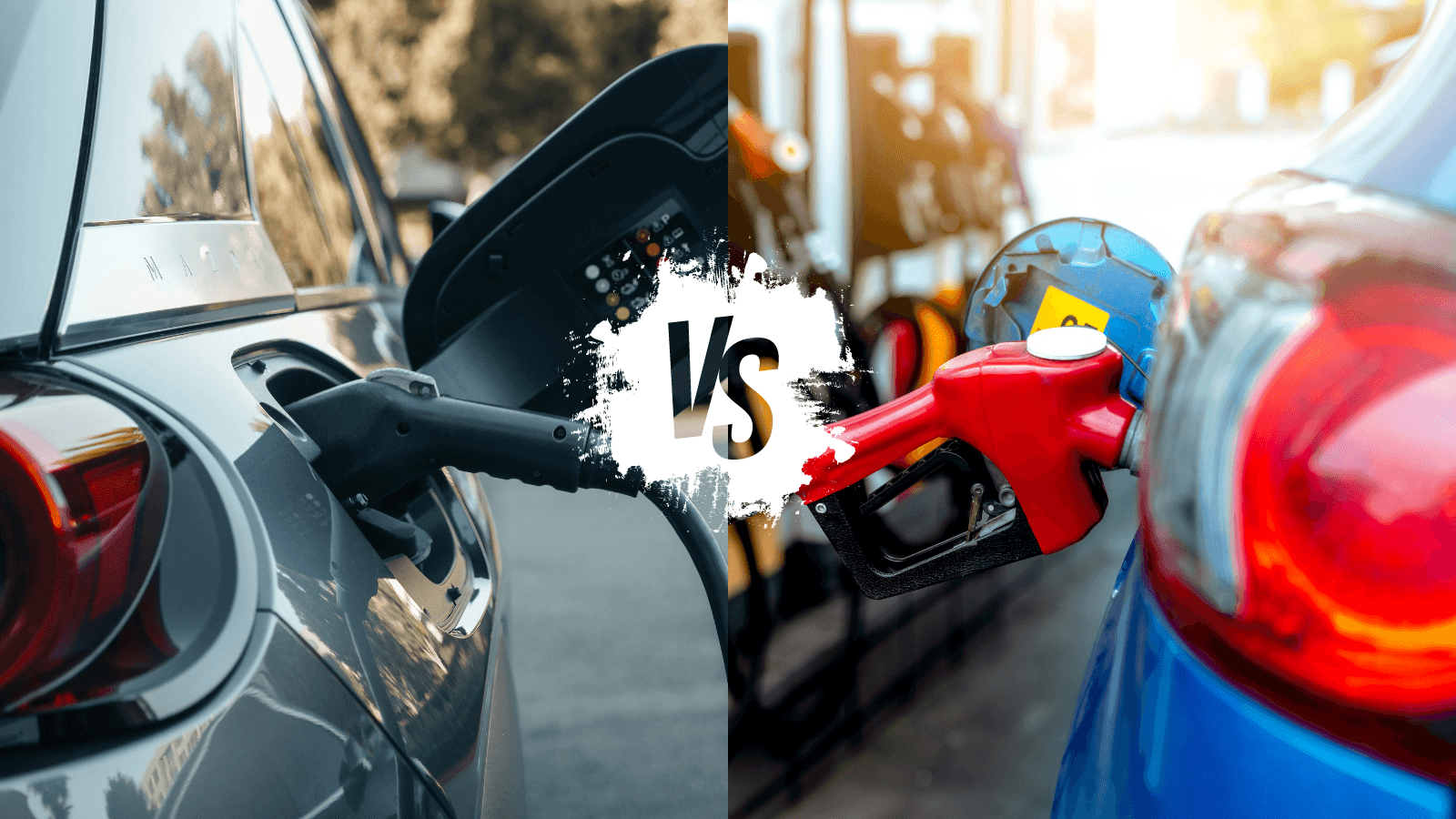
When it comes to owning a vehicle, the decision often boils down to more than just aesthetics or performance; cost plays a pivotal role. Lately, several studies and analyses have shed light on a compelling narrative: electric vehicles (EVs) are not just environmentally friendly alternatives to gas cars, but they are also much cheaper to own in the long run. Let’s delve into the factors that make EVs the more economical choice compared to their gas-powered counterparts.
Lower Sticker Prices and Tax Incentives
The path to EV ownership often starts with the price tag. Thanks to technological advancements and increased competition, the average price of new EVs has been steadily declining. According to Cox Automotive, the data reveals that the gap between EVs and gas cars is narrowing, with EVs costing just a few thousand dollars more on average. In clarification, the price dropped by a substantial $14,300 compared to the previous year, bringing the cost to just $2,800 more than the average price of new gas-powered vehicles.
Furthermore, EV tax credits in certain states and federal tax credits further sweeten the deal, delivering substantial savings if you are an eligible buyer. By leveraging tax incentives, you can relieve a portion of these expenses, resulting in noteworthy savings on an EV’s purchase price. Eligible buyers and EVs can benefit from the federal EV tax credit, which provides up to $7,500 for new EVs. Notably, used EVs are also qualified for a tax credit of $4,000, further enhancing affordability for buyers.
Reduced Fuel Costs
One of the most glaring advantages of EVs lies in their capability to bypass traditional fuel expenses. Studies consistently indicate that the cost of electricity needed to power an EV is remarkably lower than what it requires to fuel a gas car.
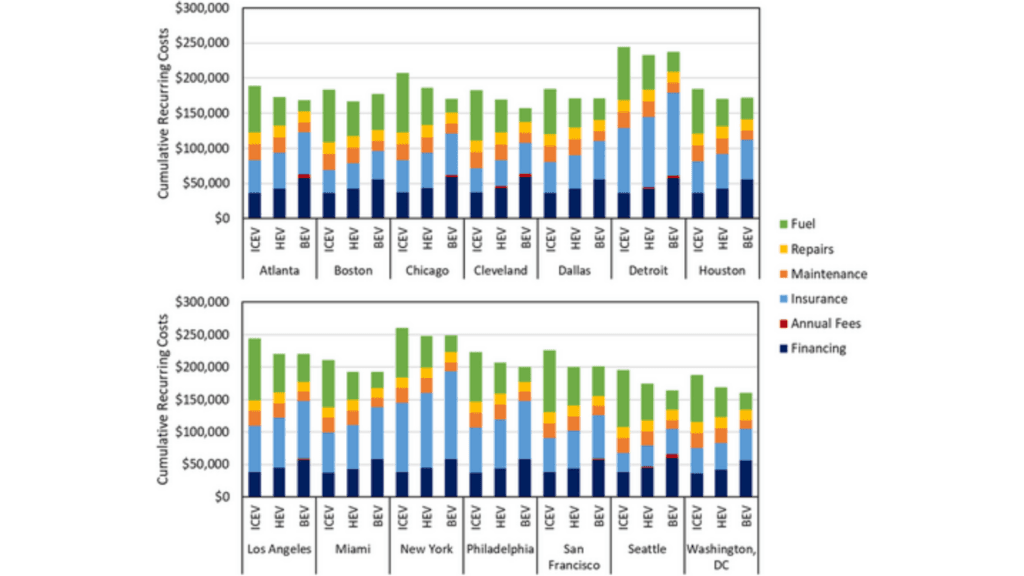
A study by researchers at the University of Michigan, published in the Journal of Industrial Ecology, found that although gas cars usually cost less to buy upfront, electric vehicles end up being cheaper in the long run. This is because they need less money for maintenance, repairs, and fuel. But whether an EV becomes as cheap as a gas car depends on where you live, how you charge and drive it, and the size and range of the vehicle. Even though buying an EV can be pricey at first, the money you save on running costs compared to hybrids and regular gas cars is a big plus.
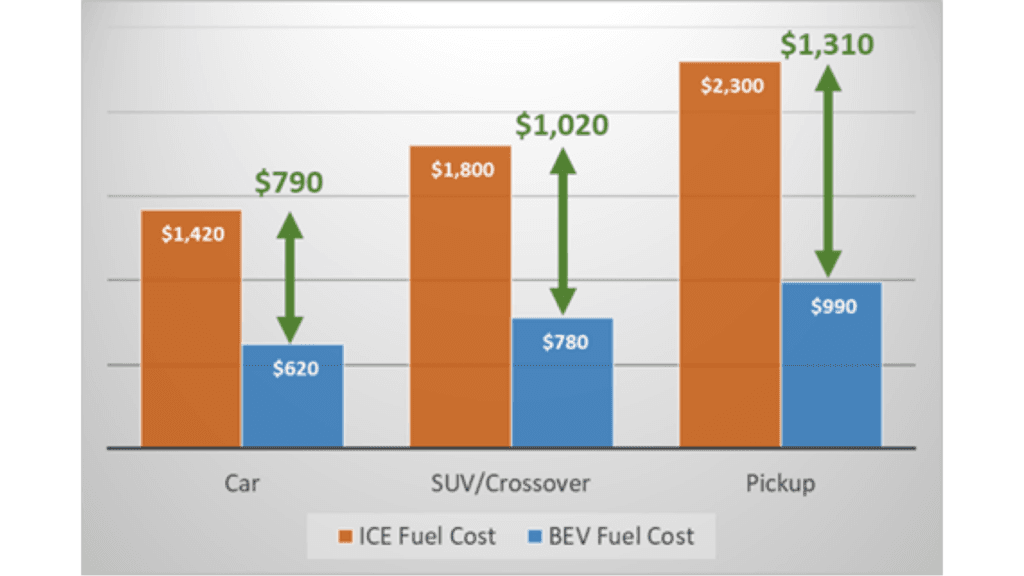
In addition, a study by Consumer Reports in 2020 found that EV drivers typically spend around 60 percent less on fuel each year compared to those with gas-powered cars. Additionally, a report from the nonpartisan policy firm Energy Innovation in 2023 highlighted that these savings extend nationwide: Every EV model in every state is cheaper to fill up than a gas-powered vehicle. Moreover, these savings are primarily due to the efficiency of current EVs, which can travel 2.6 to 4.8 times farther per mile compared to traditional gasoline cars, as indicated by real-world data collected by the U.S. Department of Energy.
Throughout analyzing the data from all these different studies, the verdict is clear: EVs save drivers a substantial amount on fuel costs, making them a financially wise choice.
Maintenance Savings
Bid farewell to oil changes and spark plug replacements. EVs boast a simpler mechanical structure, eliminating many of the maintenance tasks associated with internal combustion engines (ICE). With regenerative braking and fewer moving parts, EVs significantly reduce the need for costly repairs and upkeep, translating to significant long-term savings for owners.
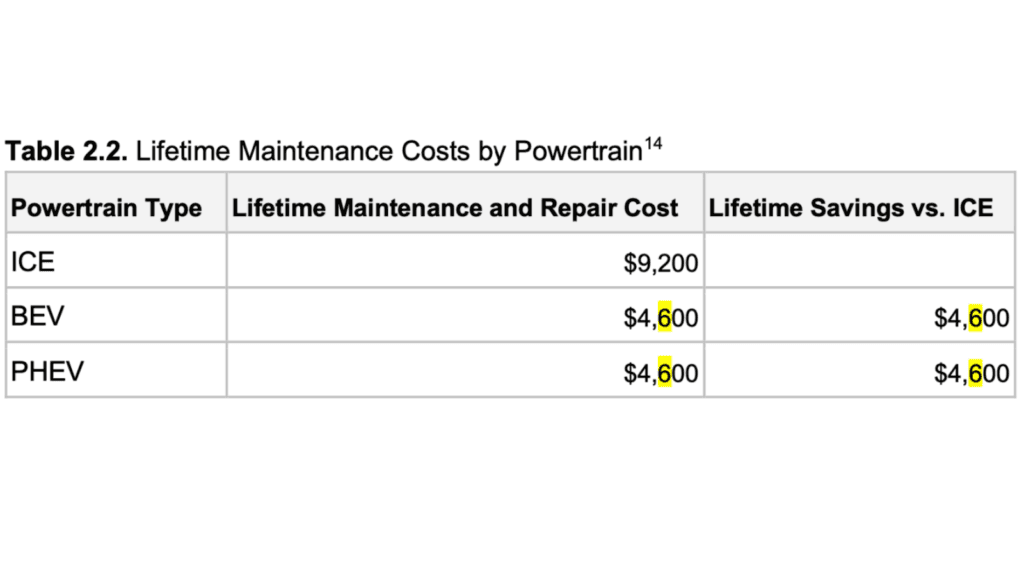
Real-world data analysis from thousands of Consumer Reports members reveals that owners of EVs are shelling out only half as much as owners of Internal Combustion Engine (ICE) vehicles for maintenance and repairs. Notably, the average lifetime cost for repairing and maintaining EVs at $4,600 and is roughly half of what it costs for ICE vehicles at $9,200.
Total Cost of Ownership
The ultimate litmus test for affordability lies in the total cost of ownership (TCO) over the vehicle’s lifespan.
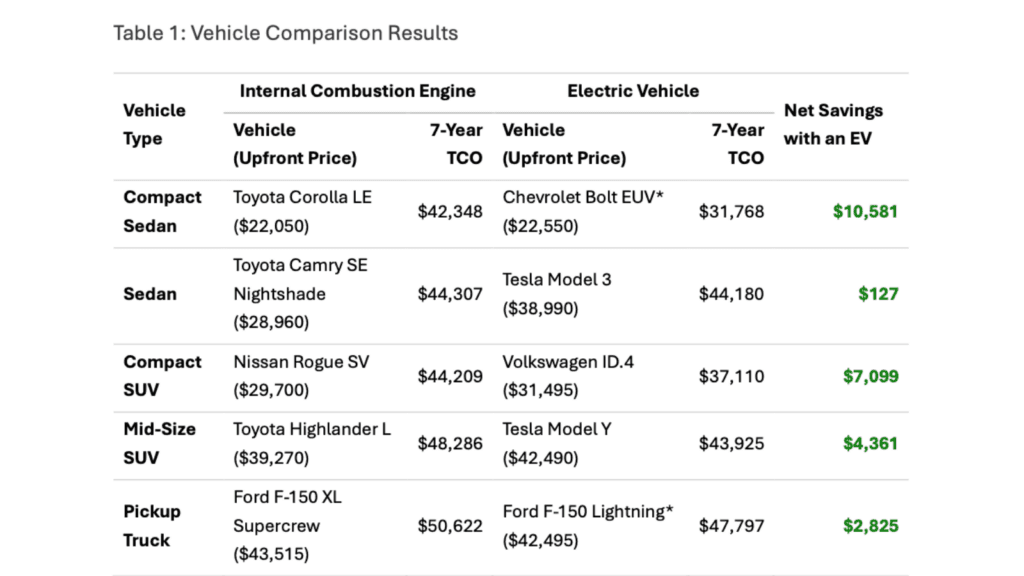
Comprehensive studies by Atlas Public Policy, consistently demonstrate that all EV models from sedans to pickups along with five EV brands outshine their gas counterparts in terms of TCO. Even when factoring in purchase price, fuel, maintenance, insurance, and depreciation, EVs emerge as the more economical choice over a seven-year period, the typical ownership duration for many drivers.
Future Outlook and Industry Trends
As the automotive landscape experiences a seismic shift toward EVs, the trajectory is clear: EVs become even more affordable and accessible. With ongoing advancements in technology, the proliferation of charging infrastructure, and strategic collaborations across industries, the future of EVs looks increasingly promising from both an economic and environmental standpoint.
The case for EVs offers more than just savings. While the financial incentives are compelling, there is a bigger picture at play. Sustainability, cleaner air, and better public health underscore the urgency of embracing electric mobility. As EV adoption continues to soar and obstacles get smaller, the future looks brighter for everyone in the EV industry. Whether you are thinking about your budget or the environment, switching to EV may just be the smartest move yet.
Want to learn more about EV? Thinking of buying an EV? Head over to EV.com discover more.
Comments
Categories
Related news


Subscribe for EV News and Reviews

AI Employee for Car Dealerships
Results in 30 days - Or We'll Give You Your Money Back