Ford Takes Over $3.8 Billion DOE Loan for Battery Storage Pivot
The move followed the dissolution of Ford’s battery manufacturing partnership with SK On, which was originally expected to receive up to $9.63 billion in federal financing through the Department of Energy’s Advanced Technology Vehicles Manufacturing program.
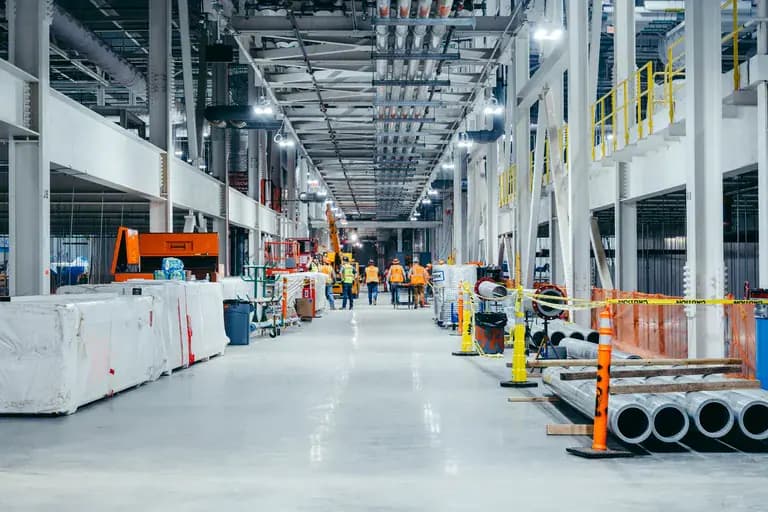
Ford Motor Company has officially assumed responsibility for a $3.8 billion U.S. Department of Energy loan tied to its former BlueOval SK battery joint venture, marking a major shift in the company’s strategy for a Kentucky gigafactory that will now focus on large-scale energy storage systems instead of electric vehicle batteries.
The move followed the dissolution of Ford’s battery manufacturing partnership with SK On, which was originally expected to receive up to $9.63 billion in federal financing through the Department of Energy’s Advanced Technology Vehicles Manufacturing program.
Ford restructures former BlueOval SK battery project
According to a recent SEC filing, Ford assumed all obligations tied to a $3.805 billion DOE promissory note with an interest rate of 4.814%. The company will make quarterly interest-only payments through January 2030 before transitioning to principal and interest payments through the loan’s maturity in July 2040.
The restructuring came after Ford finalized ownership of the former BlueOval SK battery site in Glendale, Kentucky earlier this week. The facility is now operating under a new entity called Ford Energy Systems, according to Ford Authority.
Rather than producing EV battery packs as originally planned, the site is being retooled to manufacture battery energy storage systems, commonly referred to as BESS units. These systems are increasingly used by utilities, data centers, and industrial customers to store electricity generated from renewable energy and stabilize power grids.
Ford said production at the facility is expected to begin in late 2027 with annual output capacity projected to exceed 20 gigawatt-hours.

Ford targets growing U.S. energy storage market
Ford Energy Systems plans to oversee the full battery manufacturing process at the Kentucky site, including electrode production, module assembly, and container integration.
The company’s flagship offering will be the Ford Energy DC Block, a standardized 20-foot containerized energy storage platform built around lithium iron phosphate (LFP) prismatic battery cells. Ford plans to offer the system in two versions: the FE-250, designed for two-hour energy storage applications, and the FE-450, a four-hour configuration.
Both systems will feature liquid-cooled thermal management and integrated battery management systems aimed at improving reliability, lifespan, and serviceability. Ford said the units are designed for a 20-year operational life.
The shift highlights how legacy automakers are increasingly looking beyond passenger EVs and toward broader energy infrastructure opportunities as demand for grid-scale battery storage accelerates across the United States.
Ford’s transition of the Kentucky site into an energy storage manufacturing hub could also position the company to benefit from rapidly growing electricity demand tied to artificial intelligence data centers and renewable energy expansion.
EV.com tracks the evolving EV collector space and performance electric vehicles hitting the market. Explore our listings to find the best EVs in your area available today.
Comments
Categories
Related news



Subscribe for EV News and Reviews

AI Employee for Car Dealerships
Results in 30 days - Or We'll Give You Your Money Back