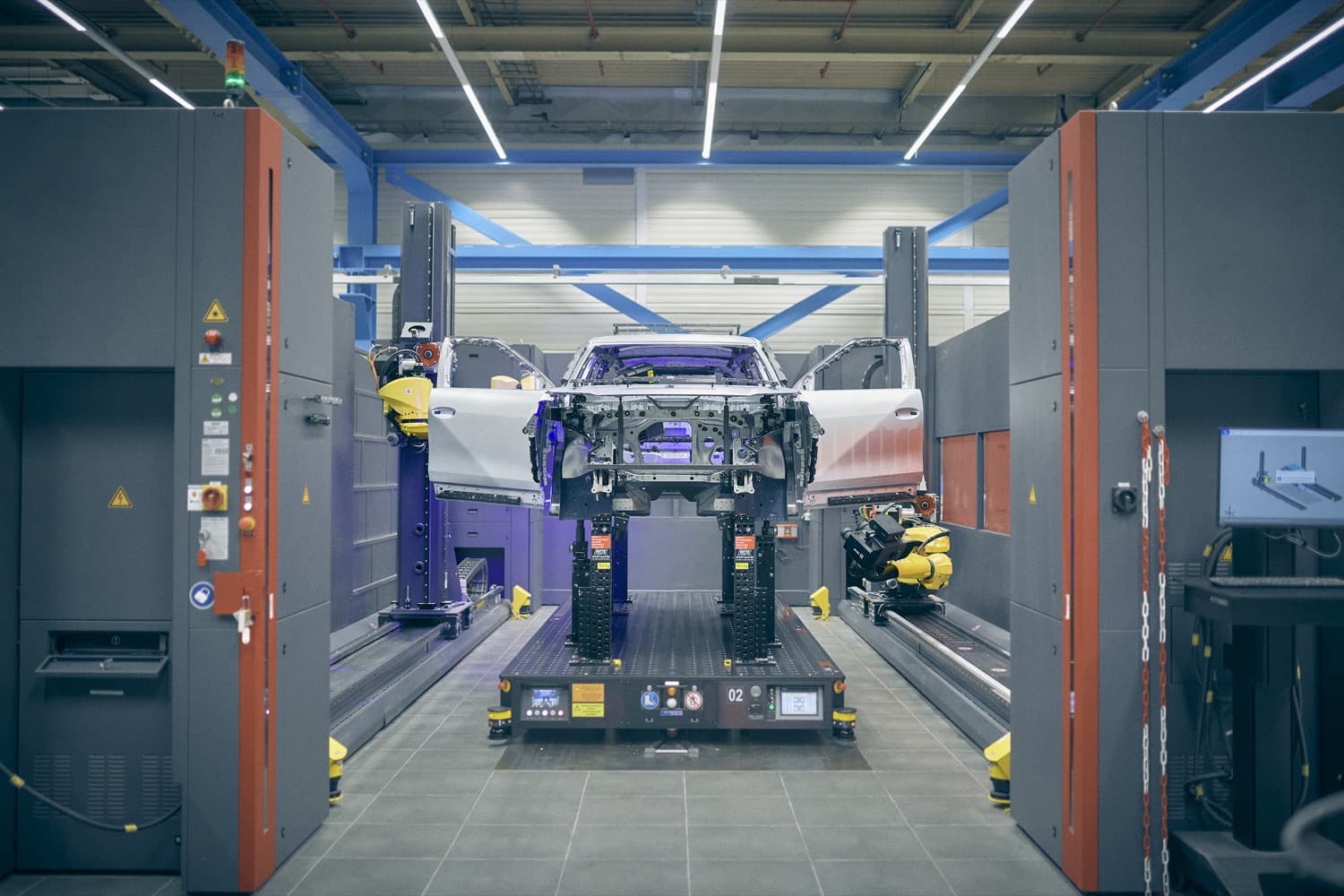
Ford Motor Company has revealed fresh engineering details about its upcoming roughly $30,000 midsize electric truck, highlighting a new 48-volt architecture, structural LFP battery, and aerodynamic gains that the company says surpass any pickup currently on the market. U.S. deliveries are targeted for 2027, with production planned at Louisville Assembly.
48V architecture and aero gains target range leadership
The new truck will ride on Ford’s next-generation Universal EV Platform and feature the company’s first 48-volt low-voltage system, developed in-house following Ford’s 2023 acquisition of Auto Motive Power. Ford says the integrated charging ecosystem and electrical redesign improve efficiency while cutting complexity.
Aerodynamics appear central to the strategy. Ford claims the truck delivers 15% better aerodynamic efficiency than any pickup on sale today. Executives said that pairing its battery with the aerodynamics of the most efficient midsize gas truck in the U.S. would result in nearly 50 additional miles of range, or about 15% more overall, and as much as 30% improvement at highway speeds, according to Ford Authority.
Design tweaks contribute incremental gains. The side mirrors are 20% smaller than conventional units, adding roughly 1.5 miles of range. A new “tire wake” approach directs airflow from the front wheels toward the rear, effectively shielding them and adding another 4.5 miles. Some trims will feature aero wheel covers to further enhance efficiency.
The truck is also targeting a 0–60 mph time of 4.5 seconds and will offer both rear- and all-wheel drive variants.
Structural LFP battery and simplified manufacturing
Ford confirmed the truck will use a prismatic LFP battery pack produced in Michigan. The pack is structural, a first for the automaker, and is paired with a redesigned regenerative braking system that the company says saves about $100 in battery cost.
Manufacturing efficiency is another focal point. The vehicle will incorporate unicastings, reducing parts count by 20% compared to a typical vehicle. Ford says it uses 25% fewer fasteners, requires 40% fewer workstations from dock to dock, and enables 15% faster assembly time.
The wiring harness is more than 4,000 feet shorter and 22 pounds lighter than the one used in Ford’s first-generation electric SUV. Despite its compact footprint, reportedly closer in size to the Ford Maverick than the Ford Ranger, Ford says the truck will offer more passenger room than the latest Toyota RAV4, excluding frunk and bed space.
“If we succeed, we will have a family of vehicles that we expect to compete on price with the best in the world, including gas vehicles,” Ford said, adding that development followed a Formula 1-inspired “fail fast, learn faster” cycle.
EV.com tracks the evolving EV collector space and performance electric vehicles hitting the market. Explore our listings to find the best EVs in your area available today.
Comments
Categories
Subscribe for EV News and Reviews

AI Employee for Car Dealerships
Results in 30 days - Or We'll Give You Your Money Back