Electric Vehicle Prices in February 2024: A Detailed Overview
A 12.8% Year-Over-Year Decline in EV Prices to $52,314 in February 2024 Amid Rising Incentives
As the automotive market continues to evolve, electric vehicles (EVs) remain at the forefront of discussions concerning sustainability, technology, and affordability. February 2024 offered new insights into the pricing trends of EVs, according to the latest analysis by Kelley Blue Book and Cox Automotive. This report delves into the details of EV pricing, exploring the factors contributing to their market dynamics and the implications for consumers and the broader auto industry.
February’s EV Prices: What Changed?
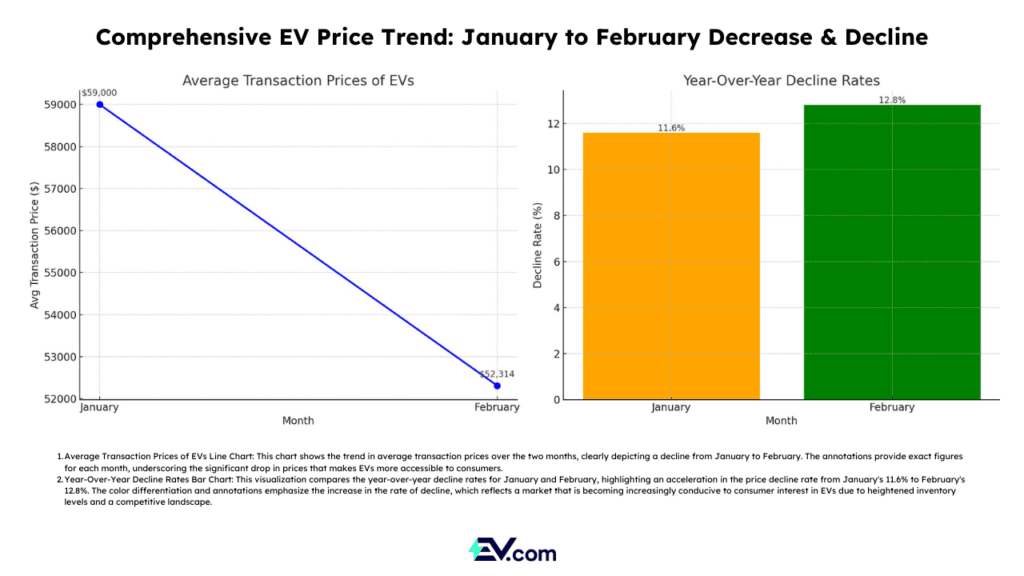
The average transaction price for electric vehicles in February was reported at $52,314, showcasing a significant decline from previous months. This downward trend in EV prices marks a 12.8% decrease year-over-year, accelerating from January’s 11.6% decline. This continued decrease in transaction prices reflects a market increasingly conducive to consumer interest in EVs, spurred by heightened inventory levels and a competitive landscape.
How Incentives Are Changing Car Prices
Incentive strategies have played a pivotal role in moderating EV prices. February saw an average incentive rate of 5.9% of the transaction price for new vehicles, with electric vehicles benefiting from this trend. High incentives and discounts, especially on popular models like the Tesla Model 3 and Model Y, have been instrumental in reducing the price premium of EVs, making them more accessible to a wider audience.


Tesla’s Impact on the EV Market
Tesla’s Model 3 and Model Y have particularly influenced the EV pricing narrative. With transaction prices reaching new lows, these models have highlighted the potential for premium EVs to become more attainable. The Model Y, for example, saw its transaction price drop to $49,363, the lowest on record, signifying a 16.2% decrease from the previous year. This demonstrates Tesla’s significant role in driving down EV prices and setting competitive benchmarks for the industry.

EV Prices Are Falling, Bridging the Gap to Affordability
The trend of decreasing electric vehicle (EV) prices brings us closer to bridging the affordability gap with non-luxury vehicles. Currently, EVs are about 19% more expensive than their non-luxury counterparts, highlighting the journey towards making EVs accessible to all. Despite this gap, the progress in reducing EV prices is undeniable and promising. The shift towards more luxury vehicles in the market highlights the value and appeal of EVs, yet the emergence of more affordable EV options shines a bright light on the potential for wider adoption and accessibility.

Conclusion
February 2024 marks another step forward in the journey towards more affordable electric vehicles. With prices continuing to decline amid rising incentives and competitive pressures, the prospect of widespread EV adoption becomes increasingly tangible. However, the journey is far from over, as the industry seeks to balance affordability with sustainability and luxury. As electric vehicles become more ingrained in the automotive landscape, their pricing trends will remain a critical area of focus for consumers, manufacturers, and policymakers alike.
FAQs
- What was the average EV transaction price in February 2024? The average price was $52,314, indicating a decline from previous periods.
- How have incentives influenced EV prices? Incentives have significantly contributed to lowering EV prices, making them more accessible to consumers.
- How does Tesla’s pricing strategy impact the EV market? Tesla’s aggressive pricing for the Model 3 and Model Y has played a key role in reducing the average EV transaction price, influencing market trends.
- Is the gap between EV and non-luxury vehicle prices closing? While the gap is narrowing, EVs remain priced significantly above non-luxury vehicles, highlighting an ongoing challenge for broader market adoption.
By EV.com
Categories: Buyer’s Guide
Comments
Categories
Related news



Subscribe for EV News and Reviews

AI Employee for Car Dealerships
Results in 30 days - Or We'll Give You Your Money Back