CATL’s Fire-Resistant Bedrock Chassis: Reinventing EV Safety With Innovation
CATL’s Bedrock Chassis Offers Unmatched Crash And Electrical Safety, Faster Development, And A Game-Changing Impact On The EV Market

In a groundbreaking development that could reshape the electric vehicle (EV) industry, CATL introduced its innovative Bedrock Chassis on December 24, demonstrating safety capabilities that dramatically exceed current industry standards.
Exceptional Crash Safety Performance
The Bedrock Chassis’s most remarkable achievement lies in its extraordinary crash safety performance. During the launch event, CATL demonstrated a prototype withstanding a frontal impact at 120 km per hour (around 75 mph) without experiencing fire, explosion, or thermal runaway.
To put this achievement in perspective, standard safety testing in China (C-NCAP) typically occurs at 56 km/h, generating impact forces equivalent to falling from a 12-meter building. The Bedrock Chassis test, conducted at more than twice this speed, withstood forces comparable to a fall from 56 meters – generating 4.6 times the typical collision energy.
Moreover, CATL employed a frontal pole impact test, where the collision area represents just one-sixth of a standard full-width impact, concentrating the force dramatically. At 120 km/h, this creates impact pressure 21 times greater than standard C-NCAP testing – a challenge no other new energy vehicle manufacturer had previously attempted.
Industry-Leading Electrical Safety Standards
This exceptional safety performance stems from three key technological breakthroughs. The chassis features a biomimetic tortoise shell structure that integrates the body and energy unit framework, complemented by an aircraft carrier-grade arresting structure that disperses impact forces across multiple pathways. The design incorporates submarine-grade hot-formed steel (2000MPa strength) and aerospace-grade aluminum alloy (600MPa strength), creating an incredibly robust protective shell.
Perhaps most impressively, the Bedrock Chassis achieves new benchmarks in electrical safety. Upon impact, it disconnects high-voltage circuits within 0.01 seconds and completely discharges residual high-voltage energy within 0.2 seconds – setting new industry records.
In addition, the battery cells themselves have undergone unprecedented testing, including 60 km/h sled impacts, 90-degree bending, and breakthrough sawing tests, maintaining their integrity throughout.
Faster Development Cycles

Beyond safety innovations, the Bedrock Chassis introduces significant manufacturing advantages. Its modular design can reduce vehicle development cycles from the traditional 36+ months to just 12-18 months. The platform’s Cell-to-Chassis (CTC) integration technology allows the chassis to absorb 85% of collision energy, compared to around 60% in traditional designs.
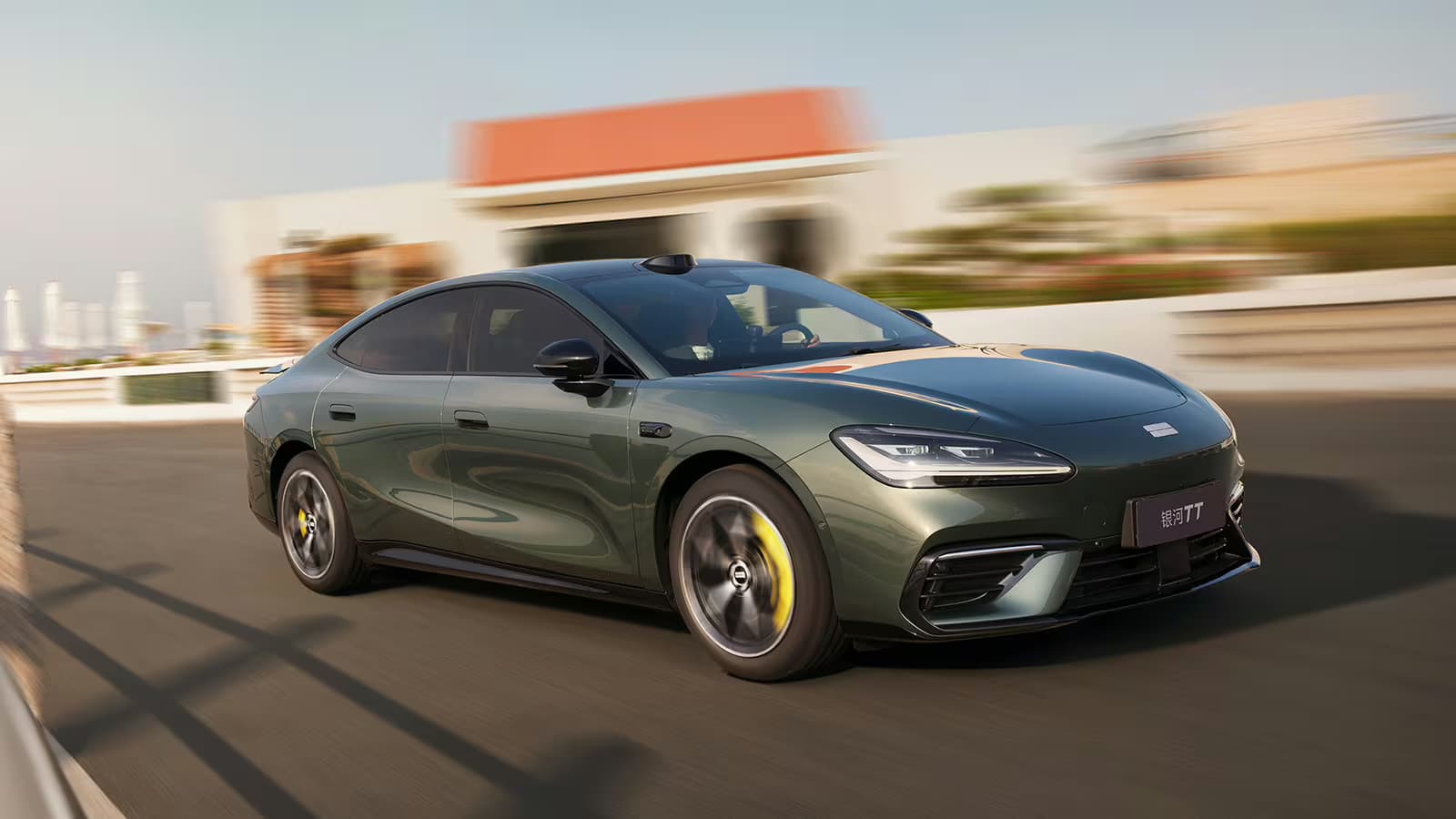
Furthermore, CATL has already secured its first commercial partnership, with automaker AVATR signing an agreement to implement the Bedrock Chassis in future vehicles. This collaboration marks the beginning of what CATL describes as a “trillion yuan market” opportunity, suggesting far-reaching implications for the EV industry.
Read More: CATL Presents Game-Changing Freevoy Super Hybrid Battery With 400 KM Electric Range
A New Era in EV Safety and Design
Through these innovations, CATL aims to definitively end the perception that traditional gasoline vehicles offer superior safety compared to electric alternatives, while simultaneously creating new standards for vehicle design and manufacturing efficiency.
Want to learn more about EV? Thinking of buying an EV? Head over to EV.com and discover more.
Comments
Categories
Related news


Subscribe for EV News and Reviews

AI Employee for Car Dealerships
Results in 30 days - Or We'll Give You Your Money Back