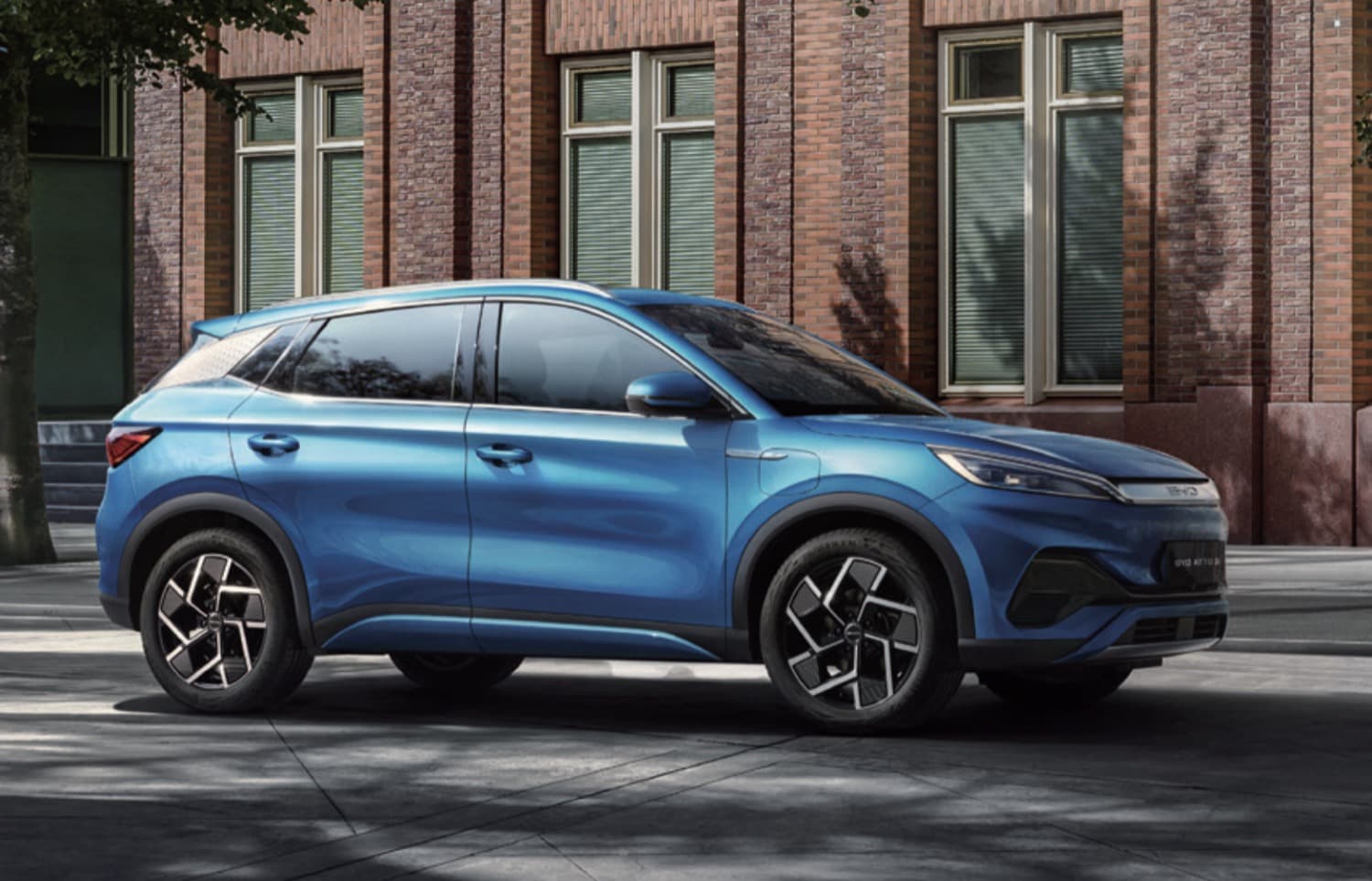
BYD Steers Into South Korea: ATTO 3 Debuts With $21,600 Price Tag
BYD’s ATTO 3 Entering South Korea Aims To Challenge Hyundai And Kia While Expanding Its Global Footprint

In a daring move that signals the shifting dynamics of the global electric vehicle (EV) market, BYD has officially entered South Korea’s EV market with an aggressively priced electric SUV aimed at challenging domestic powerhouses Hyundai and Kia.
Aggressive Pricing: ATTO 3 Debuts

In detail, the ATTO 3, BYD’s first passenger EV in the Korean market, debuts with a starting price of 31.5 million won ($21,600) – a price point that could drop to as low as 20 million won ($13,700) with government subsidies. This strategic entry comes at a major moment for BYD, which recently surpassed Tesla to become the world’s largest EV automaker.
Notably, BYD produced around 1.77 million EVs, edging out Tesla’s production by about 4,500 units in 2024. The company’s expansion into South Korea represents its latest push into new markets, following successful ventures in Southeast Asia and the Americas.
Challenges in South Korea’s EV Market
The timing of BYD’s entry presents both opportunities and challenges. South Korea’s EV market has shown signs of hesitation, with EV sales dropping 10% last year amid safety concerns following a high-profile EV fire incident. However, BYD appears prepared to address these concerns head-on.
“Korean consumers have very high standards for automobiles,” explained Cho In-Cheol, CEO of BYD Korea, during Thursday’s media event. “We received special pricing consideration from BYD headquarters specifically for the Korean market to encourage more consumers to experience our vehicles.” The company plans to build consumer confidence through a network of 15 showrooms and 11 after-service centers across the country.
ATTO 3 vs. Hyundai and Kia

The ATTO 3’s competitive positioning becomes particularly interesting when compared to domestic offerings. While Hyundai’s Casper Electric and Kia’s EV3 occupy similar price points, BYD’s entry model offers a wheelbase of 2,720 mm, slightly larger than both Korean competitors. However, the ATTO 3’s driving range of 321 km (199 miles) falls short of domestic models that can achieve up to 501 km (311 miles) on a single charge.
Moreover, BYD is not stopping with the ATTO 3. The company has announced plans to launch two additional models in the Korean market later this year: the SEAL sedan and the SEALION 7 midsize SUV. This expansion strategy mirrors BYD’s successful approach in Japan, where it managed to outsell Toyota’s EVs in that company’s home market last year.
Data Security and Battery Tech
BYD has also moved to address potential concerns about data security and battery technology. BYD Korea has confirmed that all vehicles sold in the country will use local servers for data transmission, preventing any data transfer to China. The company also emphasizes its expertise in lithium iron phosphate battery technology, though this battery choice may result in lower government subsidies compared to the nickel, cobalt, and manganese batteries favored by Korean automakers.
BYD’s Global Strategy Test
As global markets become increasingly competitive for Chinese automakers, with new tariffs in Europe and the United States affecting sales prospects, BYD’s aggressive entry into South Korea represents a significant test of the company’s international expansion strategy.
The success or failure of this venture could provide valuable insights into the changing dynamics of the global EV market and the ability of Chinese automakers to compete in markets dominated by established domestic brands.
Want to learn more about EV? Thinking of buying an EV? Head over to EV.com discover more.
Comments
Categories
Related news
Subscribe for EV News and Reviews

AI Employee for Car Dealerships
Results in 30 days - Or We'll Give You Your Money Back