Three Insights On How EVs Outpace Gas Cars in Emission Reduction
Let’s Breakdown Why EVs Are The Better Choice For Emission Reduction

As electric vehicles (EVs) swell in popularity, questions inevitably emerge about their environmental impact. Do EVs offer a cleaner alternative to gas-powered cars? Recent insights shed light on this ongoing debate, reaffirming EVs’ role in reducing carbon emissions. Here are three takeaways on how EVs outpace gas cars in emission reduction.
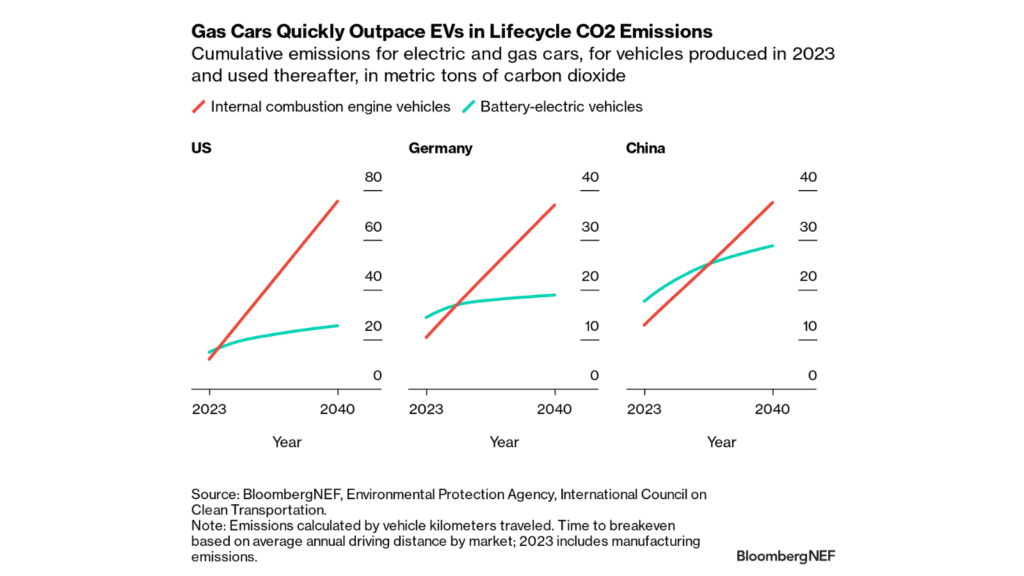
Lifecycle Emissions
BloombergNEF (BNEF) shared that one key factor in evaluating EVs’ environmental impact is their lifecycle emissions. While EVs may initially carry a higher emissions footprint due to manufacturing processes, they quickly surpass their gas counterparts once on the road. This analysis across five major markets—U.S., China, Germany, UK, and Japan demonstrates that a medium-sized EV driven for 155,000 miles emits 27% to 71% less CO2 than an equivalent internal combustion engine (ICE) vehicle.
To elaborate, if you are a driver in the U.S., you could reach the breakeven point where the emissions saved from driving offset those from manufacturing in merely two years, assuming an average annual distance traveled of around 11800 miles. With the shift towards zero-emission energy generation, these timelines are expected to shrink greatly by the end of the decade.
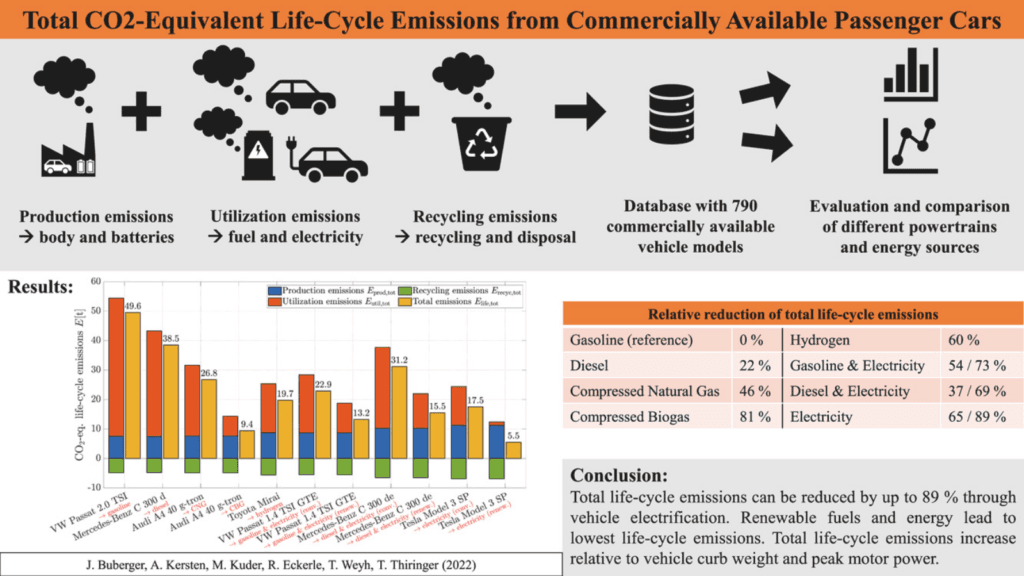
According to a study from ScienceDirect, the total life-cycle emissions of electric vehicles are reduced by up to 89% in contrast to ICE vehicles. However, the study portrays that common gasoline and diesel vehicles emit the highest amount of total life-cycle greenhouse gases (GHGs), especially compared to EVs.
Source of Charging
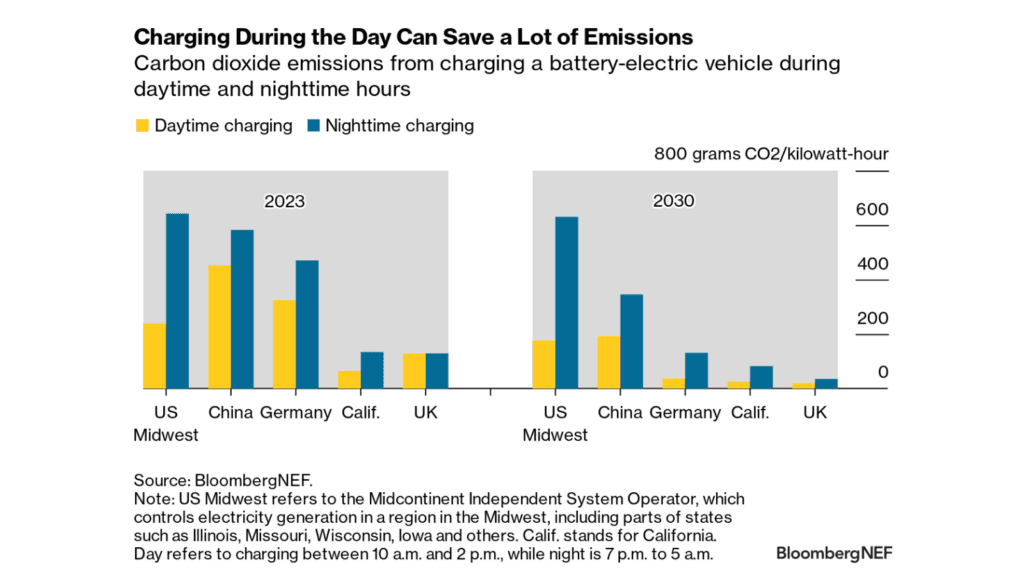
A crucial factor affecting EV emissions is the source of electricity used for charging. Regions with a higher share of renewable energy in their grids intrinsically deliver cleaner charging options. Particularly, charging during daylight hours in California yields half the CO2 emissions per kilowatt-hour (kWh) in contrast to nighttime charging. As a result, this is a gap predicted to widen in the coming years. Moreover, utilities may soon redirect towards incentivizing daytime charging, aligning with peak renewable hours to maximize environmental benefits.
According to insights from BNEF, the carbon footprint of EV charging differs immensely depending on when it happens and the energy mix of the region. For instance, if you are in California and charge during the daytime, your EV will emit only half as much CO2 per kWh compared to those who charge at night. This distinction is expected to broaden further by the end of the decade as well, emphasizing the matter of optimizing charging habits for environmental benefits.
Traditionally, utilities have incentivized nighttime charging to manage demand peaks during the late afternoon and early evening hours. Nonetheless, the suggestion to shift towards incentivizing daytime charging and aligning with peak renewable hours is the priority for the reduction of CO2 emission.
Battery Recycling Initiatives
In terms of battery recycling, implementations of battery recycling initiatives can assist the reduction of the lifecycle emissions of new EVs. In addition, resettling the entire battery manufacturing process closer to home, as advocated by regulations such as the U.S.’s Inflation Reduction Act, could substantially decrease emissions linked to global transportation and minimize the environmental impact of battery production.
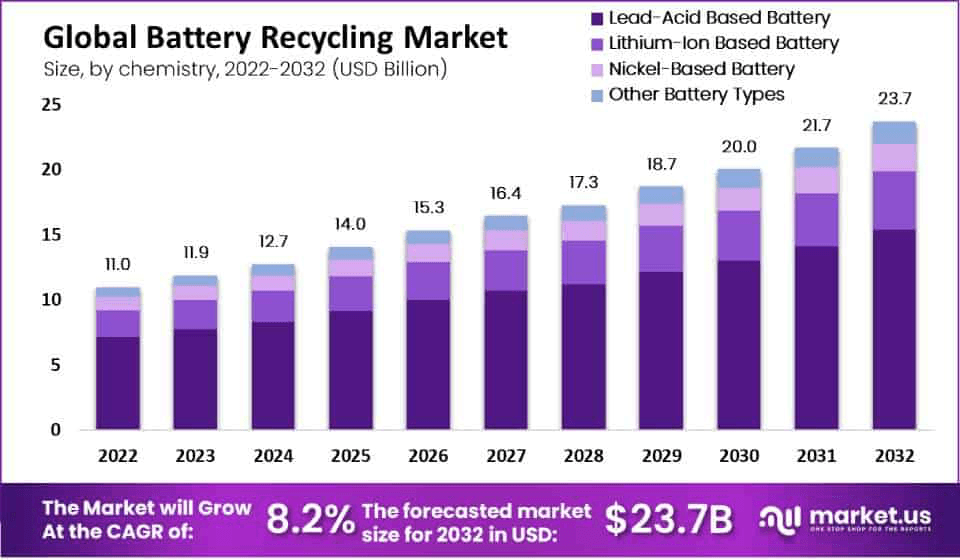
Based on Market.us, the global battery recycling market is experiencing remarkable growth, with projections indicating a surge from USD 11.9 billion in 2023 to an estimated USD 23.7 billion by 2032. This expansion underscores the increasing significance of sustainable practices in the management of end-of-life batteries, playing a pivotal role in this narrative of EVs taking charge of reflecting a concerted effort towards a more sustainable and circular economy.
Significantly, Tesla is at the forefront by employing cutting-edge battery recycling technology to lessen the environmental impact of its EVs. The company has also teamed up with Redwood Materials where the batteries undergo careful disassembly to reclaim valuable materials like lithium, cobalt, nickel, and aluminum for reuse. This approach cuts emissions generated during manufacturing.
EV: A Clearer Path to a Greener Future
The verdict is clear: EVs convey a tangible path toward a cleaner and more sustainable future. As governments, industries, and consumers continue to embrace electrification, the path ahead seems increasingly promising for reducing carbon emissions and conserving our globe for future generations.
Want to learn more about EV? Thinking of buying an EV? Head over to EV.com discover more.
Comments
Categories
Subscribe for EV News and Reviews

AI Employee for Car Dealerships
Results in 30 days - Or We'll Give You Your Money Back