Study Reveals Traditional Automakers Overtake Tesla By Leading In EV Customer Satisfaction
The 2024 J.D. Power U.S. Automotive Performance, Execution, And Layout (APEAL) Study Shows Non-Tesla EVs Exceed Tesla In Owner Satisfaction
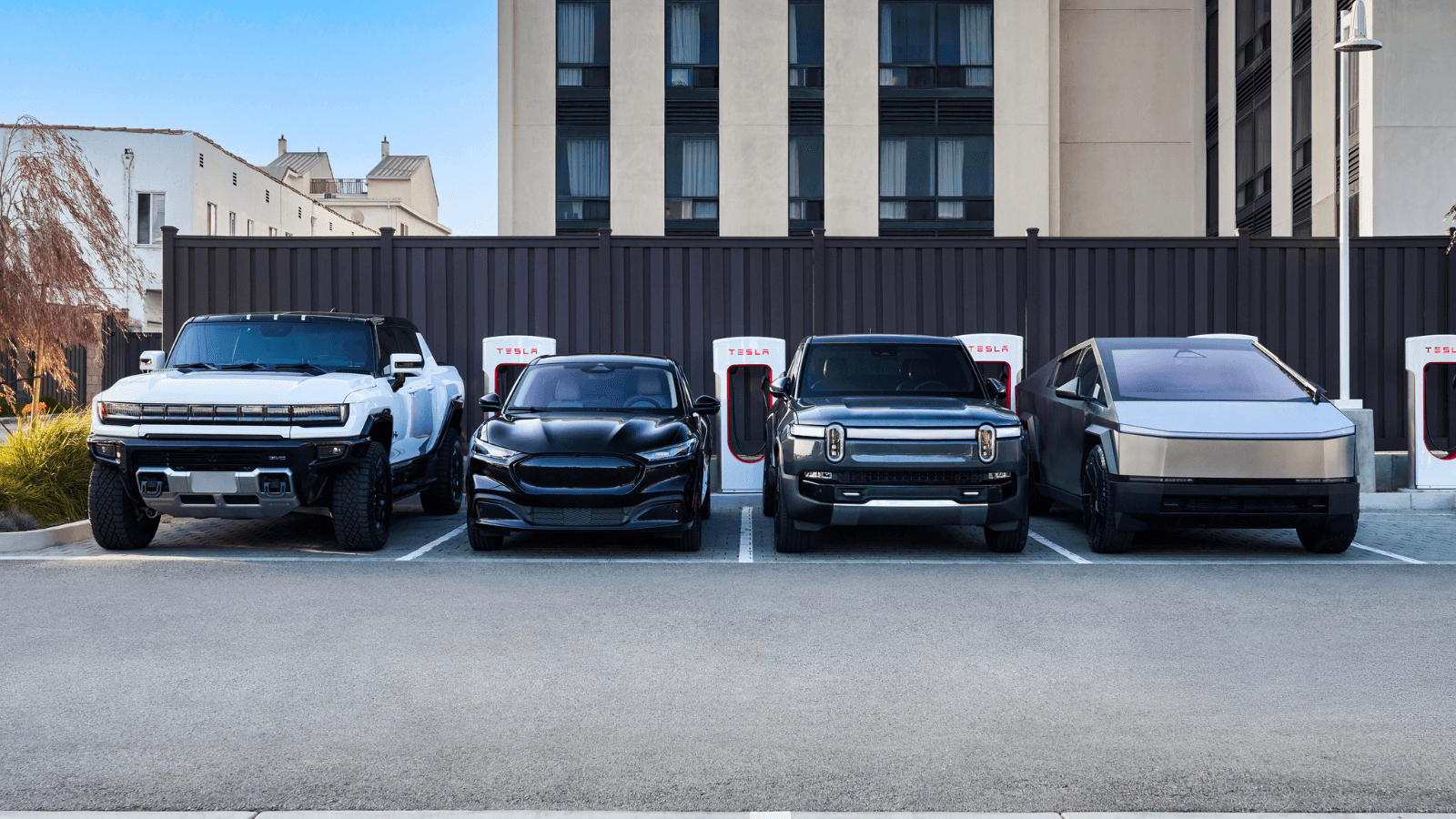
Traditional automakers have surpassed Tesla in customer satisfaction when it comes to electric vehicles (EVs), according to the latest J.D. Power U.S. Automotive Performance, Execution and Layout (APEAL) Study.
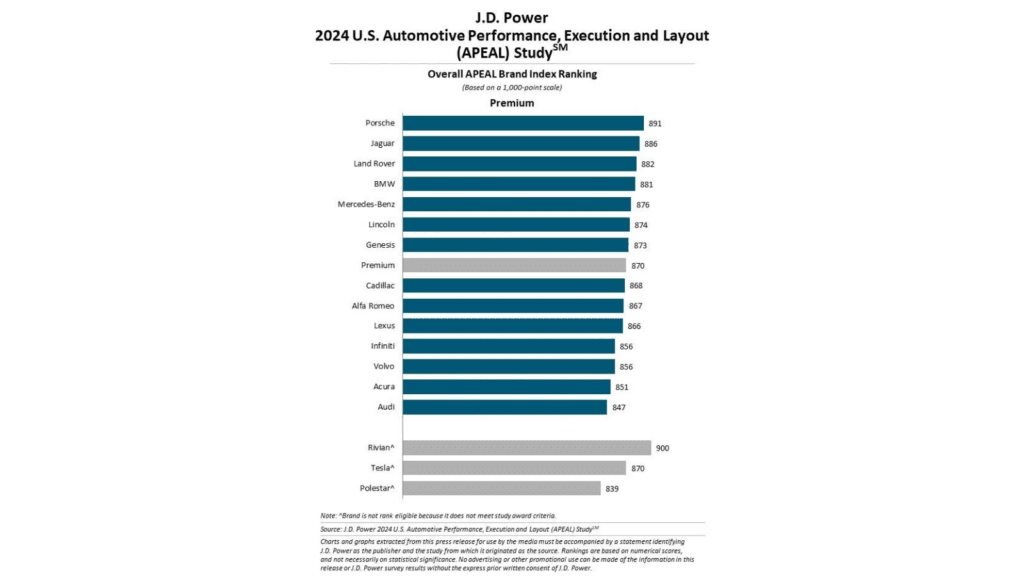
The 2024 J.D. Power U.S. APEAL Study report reveals that non-Tesla EVs are now outperforming not only Tesla models but also gasoline and plug-in hybrid vehicles (PHEVs) in overall owner satisfaction. The study, which surveyed over 99,000 owners of 2024 model-year vehicles after 90 days of ownership, shows that non-Tesla EVs scored an exceptional 877 points out of 1,000, compared to Tesla’s 870 points. As a result, this marks a notable decline for Tesla, which has seen its scores drop steadily from 896 points in 2020 to its current position.
Frank Hanley, J.D. Power’s senior director of auto benchmarking, attributes this shift to traditional automakers’ improved responsiveness to customer needs stating, “They’re launching enhanced vehicles that are more in line with what customers want, including improved interior storage and higher quality materials, as well as ensuring features have ease of use.”
Interestingly, Rivian topped the overall ranking with 900 points, though it was not officially ranked due to study criteria. Among eligible brands, Porsche led the premium segment, with its Taycan EV performing on par with the brand’s other models. Other standout performers included Genesis, BMW, and Cadillac in the premium EV category.
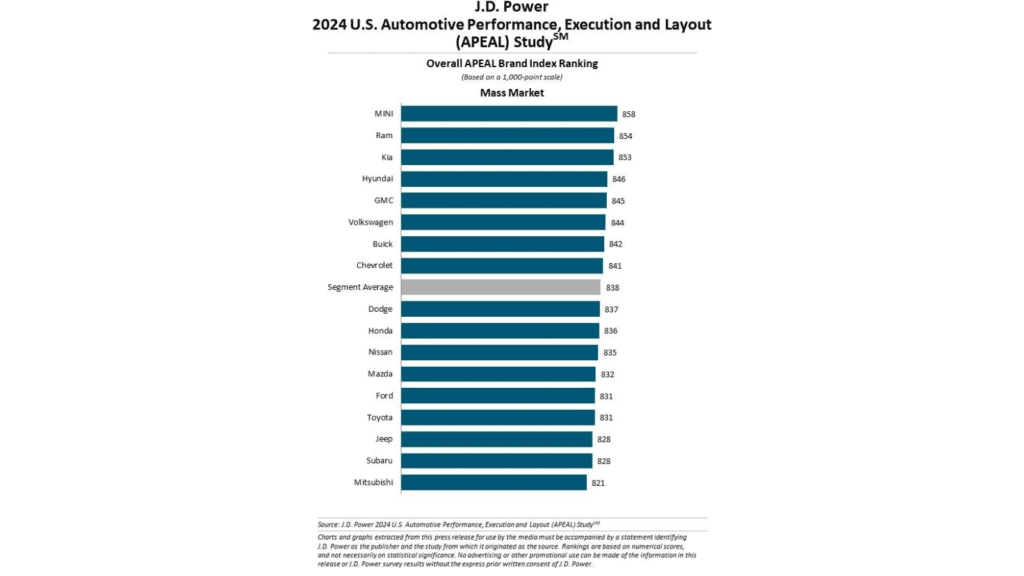
As for the mainstream segment, Kia and Hyundai both ranked in the top five, attributed to popular models such as the Kia EV9 and Hyundai IONIQ 5. Notably, the Genesis GV60, Kia EV6, Kia EV9, BMW iX, and Porsche Taycan received awards for the highest-ranking EVs in their respective segments.
In terms of Tesla, its decline in satisfaction appears to be linked to its changing buyer base. As the company has expanded its market reach through price cuts, it is attracting more mainstream buyers who are often more critical than early adopters and technology enthusiasts, where the gap in satisfaction between repeat Tesla buyers and new conquests from other brands is notably large.
With Tesla’s customer satisfaction not as high as aforementioned traditional automakers’ EV models, the company also recently reported its Q2 2024 earnings results with revenues of $25.5 billion but fell short at adjusted earnings of 52 cents a share. Yet, more plans are underway with Tesla’s Robotaxi revealing in October 10 and its next-generation Roadster login into production in 2025.
As this shift in customer satisfaction could have long-term implications for the EV market, it is clear that the competition is intensifying. With traditional automakers proving they can not only match but exceed Tesla in creating appealing EVs, this will certainly set the stage for an exciting new chapter in the automotive landscape for EVs
Want to learn more about EV? Thinking of buying an EV? Head over to EV.com and discover more.
Comments
Categories
Subscribe for EV News and Reviews

AI Employee for Car Dealerships
Results in 30 days - Or We'll Give You Your Money Back